


That nagging ache in your back after a long day? That slight slump you catch in the mirror? It's more than just a bad habit. It’s a silent drain on your confidence, chipping away at the powerful presence you deserve to have. Have you ever wondered how much taller and more self-assured you could look just by fixing it?
The good news is, learning how to maintain good posture isn't about standing ramrod straight 24/7. It's about a smarter approach. We'll show you how to build a foundation of mindful awareness, make simple ergonomic tweaks that work anywhere, and strengthen the right muscles so standing tall becomes your new normal.
Why Good Posture Is Your Greatest Asset
Ever notice how the most commanding person in a room never seems to slouch? Good posture is a superpower. It’s a form of non-verbal communication that tells the world you're present, engaged, and self-assured before you even say a word.
This isn’t just a feeling; it’s a real phenomenon. The idea of 'power posing' shows that an upright, open stance can actually influence your mindset. When you carry yourself with more confidence, you start to feel it internally. This shift can have a massive impact on your career, your social life, and even how you feel on a first date.
The True Impact on Confidence and Well-Being
The link between how you stand and how you perform is undeniable. In one corporate wellness study, a staggering 75% of participants reported better posture and less back pain after just six weeks of coaching. But here's the kicker: 71% also said they felt more confident just by sitting and standing correctly. This is clear proof that postural tweaks directly boost how effective you are at work and how good you feel in your own skin. You can dive deeper into the findings on productivity here.
Good posture delivers more than just a confidence boost. It’s a total-body upgrade:
- More Energy: When your body is properly aligned, your muscles work efficiently. This cuts down on fatigue and leaves you with more energy throughout the day.
- Better Breathing: Standing tall literally opens up your chest, allowing your lungs to take in deeper, more effective breaths.
- Less Pain: It takes the unnecessary strain off your neck, shoulders, and back, preventing those nagging chronic aches.
Key Takeaway: Stop thinking of good posture as a chore. It’s an asset. It's a direct investment in your physical health and a tool for building genuine, unshakable self-confidence.
Getting there takes a few different strategies working together. It all starts with being aware, but it's held up by a strong physical foundation. Even something as simple as the subtle lift from Conzuri's elevator sneakers can naturally encourage a taller stance, reinforcing the confidence you're building from the inside out.
Let's look at the core principles we're going to build on.
The Four Pillars of Good Posture at a Glance
To really make good posture stick, you need to think about it from a few different angles. It's not just about "sitting up straight"—it's a combination of mental check-ins, physical alignment, strength, and your environment. Here’s a quick breakdown of the fundamentals.
| Pillar | What It Means | Simple Action |
|---|---|---|
| Awareness | Actively noticing your body's position throughout the day. | Set a recurring timer to check if you are slouching. |
| Alignment | Keeping your head, shoulders, and hips in a straight line. | Imagine a string pulling the crown of your head upward. |
| Strength | Developing the core and back muscles that support your spine. | Incorporate simple exercises like planks into your week. |
| Environment | Adjusting your surroundings to promote better posture. | Position your computer screen at eye level to avoid neck strain. |
Nailing these four areas is the secret to making good posture an automatic habit, not a constant struggle. We'll explore how to master each one.
Building an Ergonomic Space Anywhere
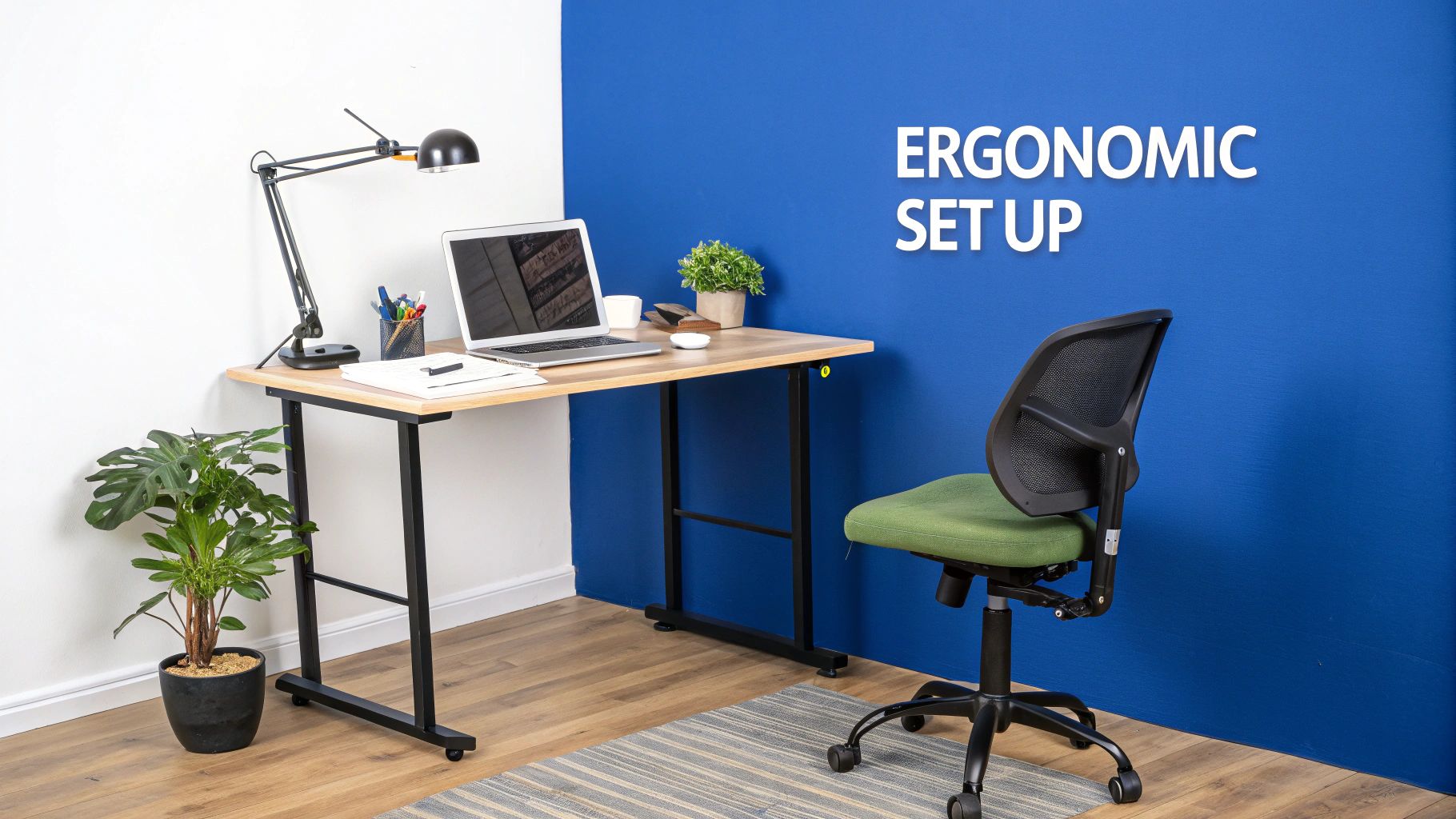
Your environment is constantly shaping your posture, and a lot of the time, it’s not for the better. But here’s the good news: you don't need a fancy, expensive chair to start fixing it. You can build a posture-friendly space just about anywhere—from a corporate high-rise to your kitchen table—with a few smart, simple tweaks.
It's all about taking back control and making your surroundings support your body's natural alignment.
The secret is aiming for 90-degree angles. Your feet should be flat on the floor, with your knees bent at roughly 90 degrees. If your feet are dangling, don't sweat it. Just grab a shoebox, a stack of books, or whatever's handy to use as a footrest. Your elbows should also form a 90-degree angle, keeping your forearms parallel to the floor.
Your DIY Ergonomic Workstation
You can nail the perfect setup without spending a dime. It's not about the gear; it's about being resourceful and understanding what your body actually needs. The single most important adjustment you can make is getting your monitor to the right height to prevent that dreaded "forward head" slouch.
Position your screen directly in front of you, about an arm's length away. The top of the monitor should be right at, or just slightly below, your eye level.
- For Laptops: This is a big one. Prop your laptop up on a stack of books or a sturdy box. You absolutely need a separate keyboard and mouse. This lets you keep your arms and wrists in a relaxed, neutral position instead of hunched over.
- For Chairs: If your chair is too low, sit on a firm cushion or even a folded towel. If it feels like there’s no back support, roll up a small towel and wedge it into the curve of your lower back. Instant lumbar support.
Tackling Posture Beyond the Desk
Your posture habits don’t just clock out when you do. Modern life has thrown us some new curveballs, like the infamous "text neck" that comes from constantly staring down at our phones.
The fix is surprisingly simple: Lift your phone to eye level instead of dropping your head to meet it.
This same awareness trick works everywhere. Whether you're on your commute or just waiting in line for coffee, take a second to think about your alignment. I find it helps to imagine a string gently pulling the crown of my head toward the ceiling, creating length in my spine. It’s a small mental cue that makes a huge difference.
A critical, yet often overlooked, part of your environment is your footwear. Your feet are your foundation. Wearing supportive shoes is one of the most effective ways to maintain alignment throughout the day. For more on this, explore our detailed guide on the best shoes for standing all day.
And while you're optimizing your workspace, don't forget where you spend a huge chunk of your time: your bed. Your sleep environment plays a massive role in your posture. Getting your spinal alignment right during those hours is non-negotiable. For some great insights, check out this piece on the importance of your pillow in maintaining spinal alignment. It can be a game-changer for preventing morning stiffness.
Ultimately, building an ergonomic space is a 24/7 commitment to your well-being.
Strengthening Your Postural Foundation
Let's be real. Holding good posture shouldn't feel like a workout. If you're constantly reminding yourself to "sit up straight" and it feels exhausting, that's a huge sign. It means your postural muscles—the network in your core, back, and shoulders—are not pulling their weight.
Think of it this way: your skeleton is the frame of the house, but your muscles are the load-bearing walls holding everything up. When those muscles are weak, gravity takes over. That's when you get the dreaded forward slump, the nagging lower back pain, and that slouch you catch in your reflection.
The goal isn't just to know what good posture looks like. It's to build a body that holds it on autopilot. And the centerpiece of all this? A strong core. It’s your body’s built-in corset, stabilizing your entire torso without you even thinking about it.
Essential At-Home Posture Exercises
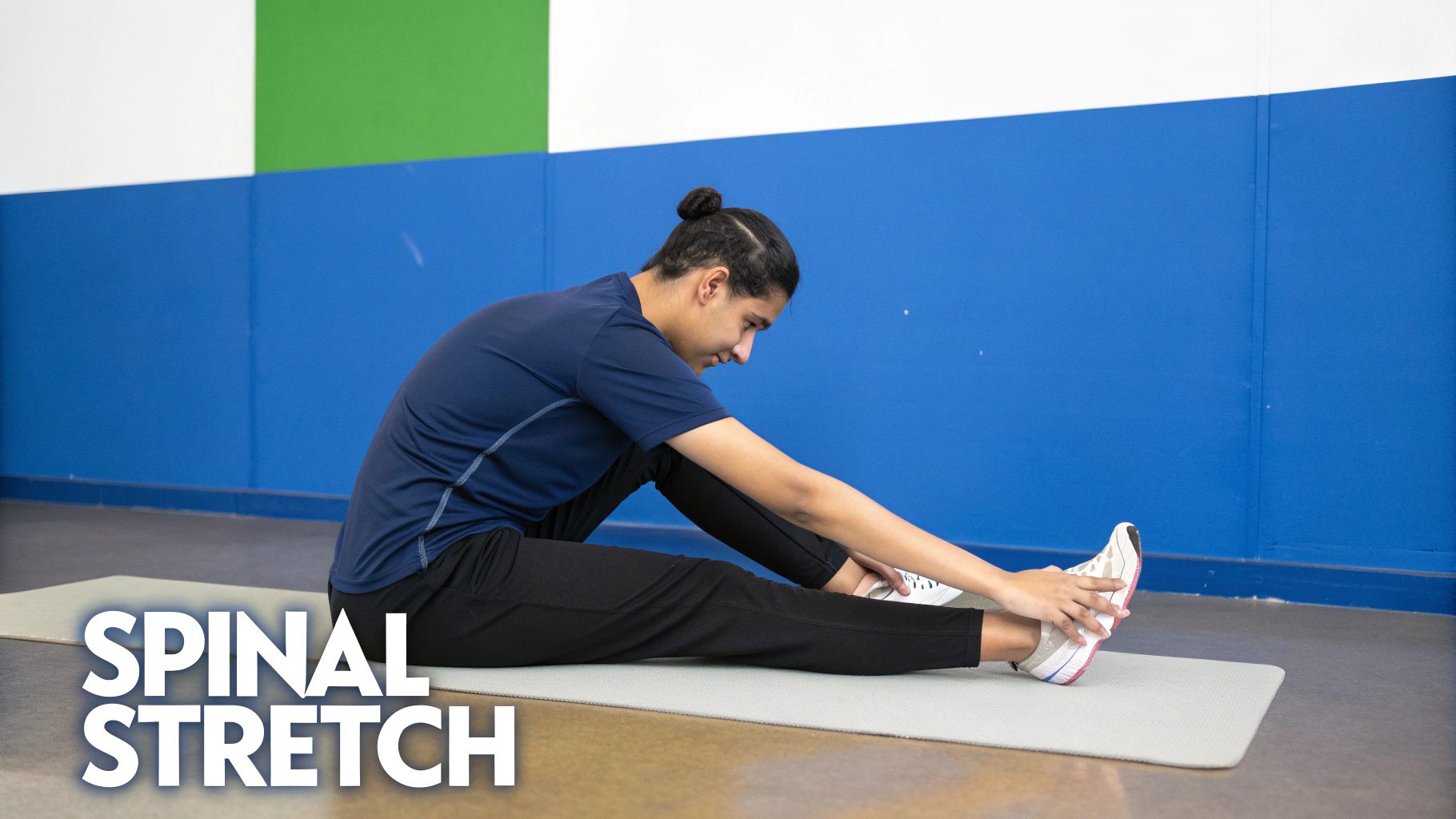
You don't need a gym membership or a rack of weights to build a solid postural foundation. In fact, some of the most powerful moves use nothing but your own bodyweight. They teach your muscles to fire together, creating stability from the inside out.
Here are three no-excuse exercises you can do practically anywhere:
- The Plank: This isn't just about getting abs. The plank strengthens your entire core, especially the deep transverse abdominis muscle, plus your back and shoulders. Get on your forearms and toes, keeping your body in a dead-straight line from your head to your heels. Hold for 30 seconds. The key is to not let your hips sag.
- The Bird-Dog: This one is a game-changer for spinal stability. Start on all fours (hands under shoulders, knees under hips). Now, slowly extend your right arm straight forward while extending your left leg straight back. Keep your core locked and your back flat—no arching. Pause, return, and switch sides.
- The Glute Bridge: Weak glutes are a primary culprit behind lower back pain and a tilted pelvis. Lie on your back, knees bent, feet flat. Drive your hips up toward the ceiling until you have a straight line from your shoulders to your knees. Give your glutes a hard squeeze at the top, then slowly lower back down.
This image breaks down exactly how these exercises translate to better alignment in your day-to-day life.
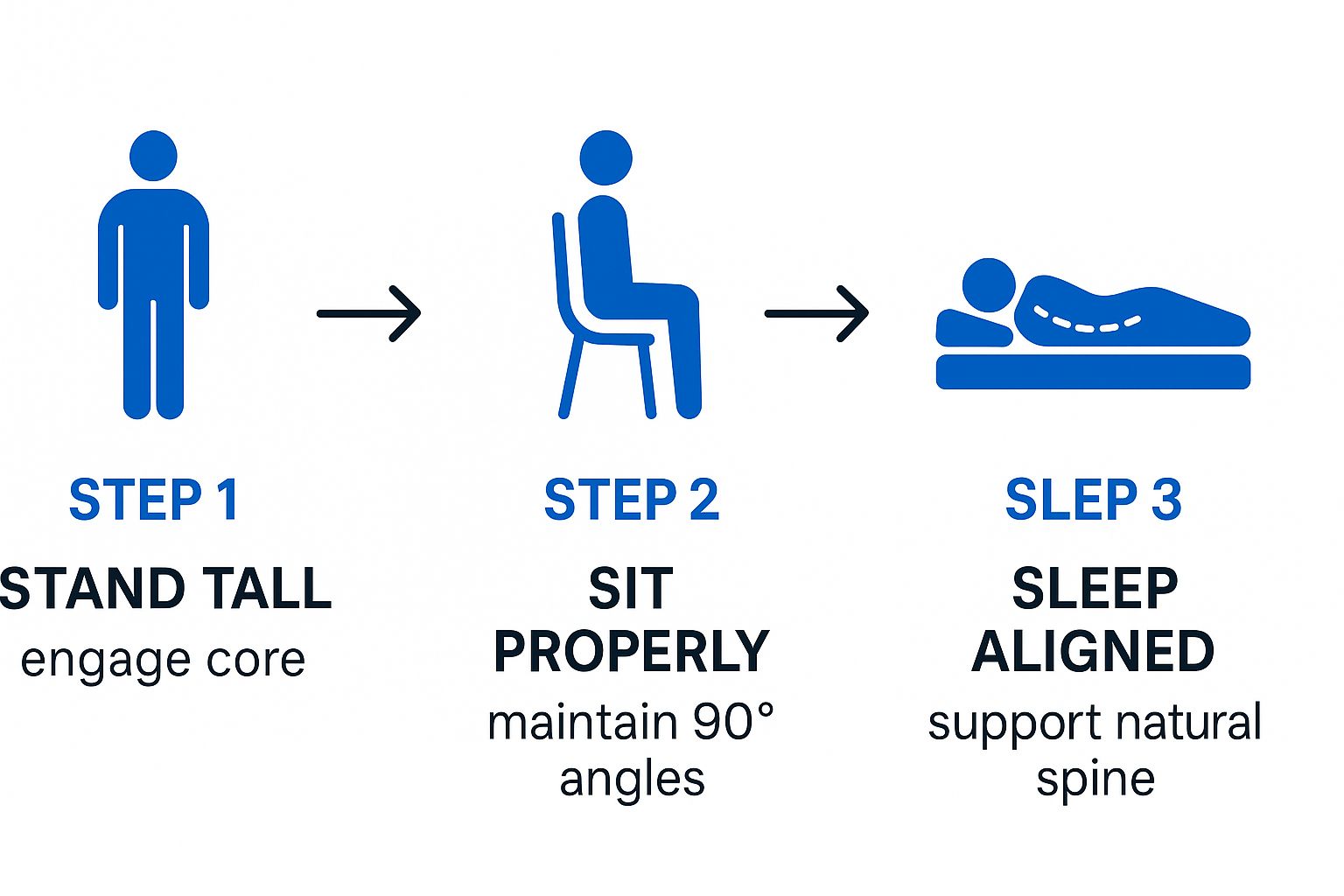
You can see how a strong foundation isn’t just for the gym—it’s what keeps you properly aligned whether you’re standing, sitting, or even sleeping.
Building Your Foundation from the Ground Up
Just like a strong core supports your spine, the right footwear supports your entire body. Seriously. The base you stand on affects everything up the chain—ankles, knees, hips, and all the way to your head.
This is where thoughtful design, like Conzuri’s, makes a difference. Unlike traditional brands such as Chamaripa, Conzuri designs modern silhouettes that blend seamlessly. We build shoes that look sharp but also provide the structural support most brands ignore.
Expert Insight: A supportive shoe is basically an external foundation. It helps align your entire lower body correctly, which makes it way easier for your postural muscles to do their job. You’ll feel less strain and fatigue by the end of the day.
If you really want to lock in good posture, consider adding targeted flexibility and strength work. A lot of guys find that practices like private yoga classes can fast-track their progress.
And for another layer of personalized support, you can learn more about how insoles can further customize your footwear for height and posture.
When you combine a strong internal core with a solid external foundation, effortless and confident posture isn't just possible—it's inevitable.
The Global Posture Problem Is Bigger Than You Think

Let's be honest—the battle for good posture isn't just happening in your office chair. It’s a full-blown public health issue happening on a global scale. The nagging aches and pains that come from slouching have exploded, mostly because our lives have become so digital and sedentary.
This shift has created a massive, and still growing, demand for solutions that actually work.
What might feel like a personal annoyance is actually a major economic problem. Back pain, one of the most common results of poor posture, is a leading cause of lost productivity and disability around the world. The financial toll is staggering, hitting businesses and healthcare systems hard. As more of us spend our days hunched over screens, the need for proactive fixes has never been more obvious.
And this trend isn't slowing down. Just look at the money pouring into the posture correction market.
The global market for posture correction was valued at USD 1.24 billion and is on track to hit nearly USD 2 billion by 2030. That growth is fueled by things like increased urbanization and the realities of modern work. You can read more about the global posture correction market's growth here.
This data just confirms what many of us feel in our own bodies every day: we need better ways to support ourselves.
What's Driving the Demand?
Two big demographic shifts are pouring fuel on the fire: the worldwide increase in desk jobs and aging populations.
As societies get older, staying mobile and preventing chronic pain becomes a top health priority. Older adults are actively looking for ways to stay strong and properly aligned, which has opened up a huge market for supportive products.
At the same time, younger generations are walking into a workforce where sitting for eight hours a day is the default. They’re more health-conscious than any generation before them and get that preventing a problem is way smarter than trying to fix it later. This mindset is shifting posture from something you only think about when you're in pain to a daily wellness priority.
Why Proactive Solutions Are Taking Over
This is where the conversation gets interesting. It's moving away from clunky braces and complicated exercise routines and toward integrated lifestyle tools. People want solutions that fit seamlessly into their day, offering support without being a hassle.
This is exactly why well-designed footwear is finally getting the recognition it deserves as a key part of the solution. The right shoes do more than just cushion your feet—they create the foundational alignment that your entire body relies on.
When your base is stable, holding yourself in an upright, confident stance becomes almost effortless.
Choosing the right footwear is a proactive tool for your long-term health, helping you build better habits from the ground up. If you're wondering what to look for, checking out shoes that make you taller and support posture is a great place to start. When you invest in proactive wellness tools like Conzuri, you’re not just buying a shoe—you’re making a smart investment in your daily comfort and future health.
Integrating Posture into Your Daily Routine
Real, lasting change doesn't come from massive, one-off efforts you can't stick with. It’s built brick by brick, through tiny, consistent actions that eventually become as natural as breathing. Fixing your posture for good happens in those small moments, weaving mindful habits into your day until you don't even have to think about them.
This is the magic of what I call “posture micro-habits.” Forget blocking out an hour for stretches. These are tiny, almost effortless adjustments you can make anywhere, anytime. Instead of one huge, daunting task, you're making dozens of small, positive choices that compound into a major, permanent shift.
From Slouching to Standing Tall
The trick is to piggyback these new habits onto things you already do. Find a trigger in your daily routine and attach a posture reset to it. For instance, every time you take a sip of coffee or water, use that as your cue for a quick chin tuck. Just gently pull your chin back toward your spine, like you're trying to make a double chin, and hold it for a couple of seconds. This one simple move is a direct counterattack on the "tech neck" we all get from staring down at screens.
Here are a few more you can sprinkle throughout your day:
- The Doorway Stretch: Every time you walk through a doorway at home or the office, plant your forearms on the frame, and gently step through. You'll feel a great stretch across your chest, directly undoing the damage from hunching over a keyboard.
- The Pre-Meeting Reset: Just before you walk into a meeting or jump on a call, take a second to roll your shoulders. Bring them up toward your ears, pull them back, and then let them drop down. It’s a tiny move that instantly opens you up and projects confidence.
- The Hourly Stand-Up: Set a silent alarm on your watch or phone for the top of every hour. When it buzzes, take just 30 seconds. Stand up, reach your arms high overhead, and feel your spine decompress. It’s a powerful circuit breaker for a sedentary day.
This isn’t just about looking better or avoiding a stiff neck; it’s a serious health issue. Low back pain, which is almost always made worse by poor posture, is now the single leading cause of disability across the globe. It's no wonder the posture corrector market is projected to skyrocket to USD 2.37 billion by 2032. This shows just how many people are realizing that proactive care is essential in our desk-bound world.
The Mind-Body Connection
Beyond the physical movements, the real goal is to build a stronger mind-body connection. This is like installing an internal alarm system that pings you when you start to slouch, long before a mirror or a nagging partner has to. A fantastic way to train this is with a quick body scan.
Expert Tip: Once a day, maybe before you get out of bed or right after you sit down at your desk, close your eyes. Mentally scan your body, starting from your feet and moving up to your head. Where are you holding tension? Are your shoulders creeping up to your ears? Is your lower back arching? Don't judge it, just notice it. Awareness is the first step.
This kind of mindfulness practice hardwires your brain to recognize the feeling of good alignment. After a while, your body will start to self-correct on its own. It's an incredibly useful skill, especially for professionals who need to maintain their presence without getting distracted—a topic we touch on in our guide to comfortable dress shoes for work.
Even the shoes you wear can act as a subtle, constant reminder. The gentle lift in our elevator sneakers, for example, naturally encourages a taller, more upright stance. It’s a physical cue that reinforces the powerful new habits you’re building, making confident posture feel less like an effort and more like your new normal.
Common Questions About Improving Your Posture
Even with the best game plan, the journey to better posture can throw a few curveballs. Knowing what to expect can keep you motivated when things feel tough. We’ve rounded up the most common questions we hear to give you clear, straightforward answers.
How Long Does It Take to Fix Years of Bad Posture?
There’s no magic number here, but you can feel a real, tangible difference within a few weeks of consistent effort. At first, just holding good posture might feel exhausting. That's a good sign—it means you're waking up muscles that have been snoozing for years.
After about four to six weeks, those core and back muscles will have built up some strength. Proper alignment will start to feel more natural and less like a chore. But let's be realistic: correcting deeply ingrained habits from years of slouching can take several months. The key is to focus on steady progress, not overnight perfection.
Can Elevator Shoes Actually Help with Posture?
Yes, but only if they’re designed the right way. Quality elevator shoes do more than just add a few inches; they can be a functional tool for your alignment. A well-designed shoe with a supportive, slightly elevated heel gently shifts your center of gravity forward.
This subtle shift encourages your spine to straighten and your shoulders to naturally pull back over your hips to keep you balanced. Think of it as a constant, low-key physical reminder to stand taller. For a deeper look, check out our guide on how to look taller in shoes while supporting your posture.
Unlike cheap, poorly made height shoes that can wreck your feet, a proper ergonomic design provides all-day support. It’s a practical way to boost both your physical stature and your posture at the same time.
Key Insight: The best posture solutions are the ones you can weave seamlessly into your daily life. Supportive footwear provides a solid foundation that makes every other effort—from exercises to ergonomic tweaks—that much more effective.
Is It Ever Too Late to Improve My Posture?
Absolutely not. It is never too late to improve your posture. The human body has an incredible ability to adapt and change. While correcting long-standing habits might take a bit more dedication if you're older, the principles are exactly the same.
Strengthening your core, increasing your flexibility, and being more mindful of your alignment are effective at any age. Starting today can lead to huge benefits, including less pain, better mobility, improved balance, and a serious boost in your overall quality of life. The journey starts with a single step—or in this case, by standing just a little bit taller.
At Conzuri, we believe that confidence starts from the ground up. Our shoes are designed not just to elevate your height, but to provide the foundational support that encourages better posture and a more commanding presence.
Discover the Conzuri collection and feel the difference for yourself.
Recent Articles


