


Struggling with self-doubt at work, even when you know you’re good at your job? You’re not just imagining it. You can be an expert in your field—skilled, experienced, and dedicated—but still feel a knot of anxiety in your stomach before a big presentation or team meeting. This gap between your actual competence and your confidence is where careers stall.
The promise? Lasting confidence isn't a personality trait you're born with; it's a skill you can build, piece by piece. This guide provides a strategic roadmap to take back control, grounded in actionable steps you can start using today. We'll show you how to rewire your mindset, close any skill gaps, and project the authority you've already earned.
Why Is Feeling Confident at Work So Hard Right Now?
The modern workplace is a perfect storm for eroding self-assurance. Rapid tech changes, constant restructuring, and the unspoken pressure to be "on" 24/7 create a sense of instability. It's easy to feel like you're on shaky ground, even as a top performer.
The data confirms this feeling. A recent study found that while a massive 89% of workers feel confident in their skills, only 65% feel secure in their jobs. That huge gap tells a critical story: being good at what you do no longer guarantees you feel good about where you stand. You can discover more insights from the global workforce barometer to see the full picture.
This guide isn’t about fluffy affirmations. It’s about building a system for confidence. We'll give you a clear roadmap based on three core pillars.
The 3 Pillars of Unshakeable Professional Confidence
Lasting, genuine confidence isn't found; it's built. The table below breaks down the foundational areas we're going to focus on. Think of it as your blueprint for systematically constructing the self-assurance you need to thrive.
| Pillar | Key Action | Expected Outcome |
|---|---|---|
| Mindset & Mentality | Actively reframe negative self-talk and challenge imposter syndrome. | A resilient internal foundation that isn't shaken by setbacks or criticism. |
| Skills & Competence | Create a proactive growth plan to fill any perceived gaps in your abilities. | Knowing you have the skills to back up your confidence, eliminating anxiety. |
| Presence & Projection | Master your body language, communication, and physical appearance. | Projecting authority and self-assurance before you even say a word. |
By tackling each of these pillars with small, consistent actions, you create undeniable proof of your value—both to yourself and to others. It’s about closing that gap between what you can do and what you believe you can do.
This is a strategic approach. It involves mastering your inner game, sharpening your professional toolkit, and learning how to project the authority you’ve earned. This also includes the smaller, often overlooked details, like how you carry yourself and the subtle signals your appearance sends. For many, integrating tools like our collection of men's elevator shoes provides that final, physical boost to match their internal confidence.
The right strategy can make a difference faster than you think.
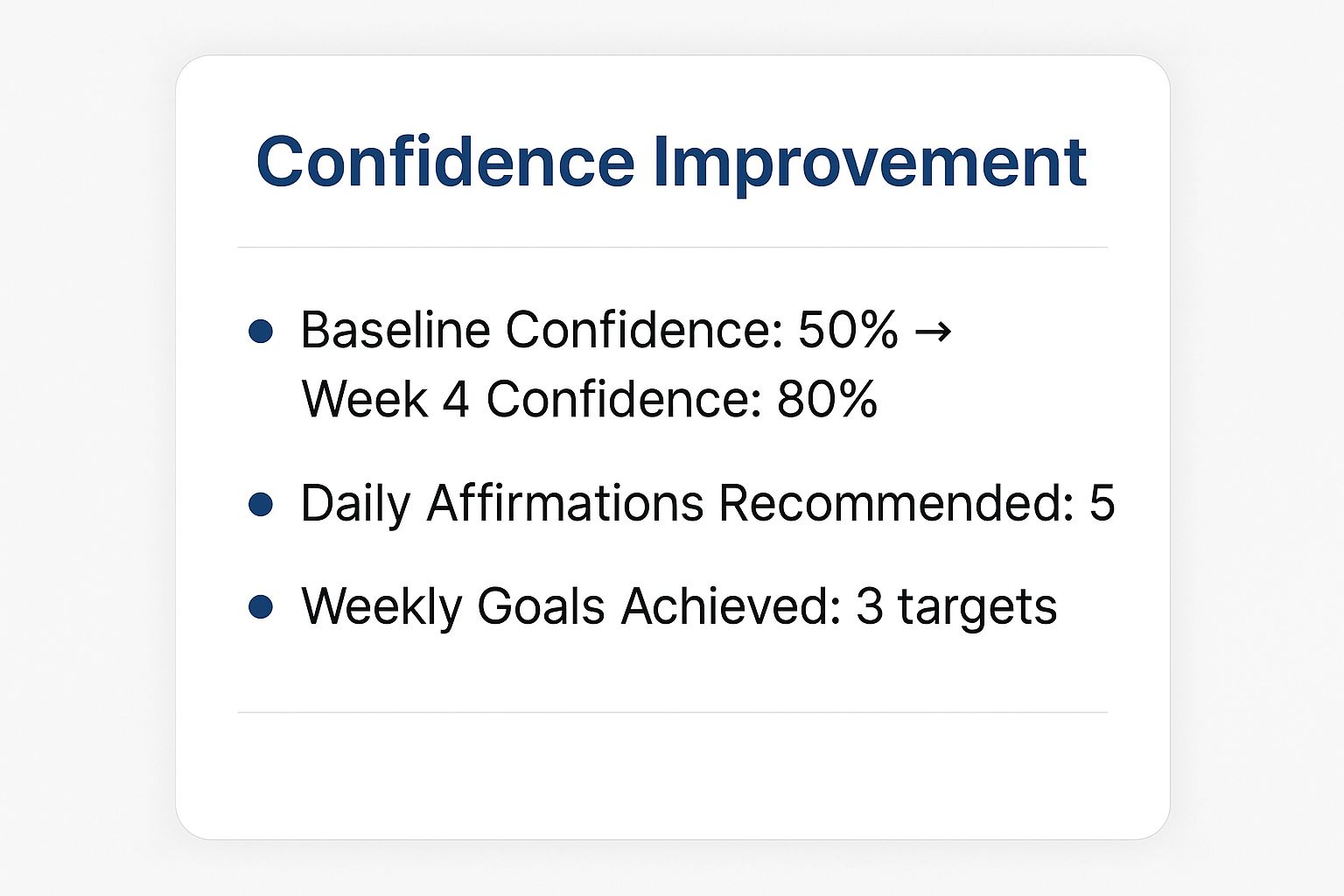
The data is clear: a focused approach pays off. When you master these pillars, you’re not just hoping to feel more confident—you’re building a system that makes it inevitable.
Rewire Your Mindset to Overcome Self-Doubt

Lasting confidence isn't about "faking it till you make it." It's built from the inside out, starting with the inner critic that holds you back. If you've ever felt like a fraud just waiting to be "found out," despite your accomplishments, you know exactly what I'm talking about.
That feeling has a name: imposter syndrome. It’s not a personal failure; it's a common cognitive distortion. But you can systematically dismantle it.
The trick is to start a competence-confidence loop. It’s a simple, powerful cycle: you complete a small, tangible task, which gives you a micro-dose of confidence. That small boost empowers you to tackle a slightly bigger challenge. You succeed again, building more competence and, you guessed it, more confidence.
Start with Micro-Achievements
You don’t need a huge promotion to get this ball rolling. Momentum starts small. The goal is to build a collection of undeniable proof that your negative inner voice is wrong.
Here’s your first move: create a "brag file."
This isn't for showing off. It's your private evidence locker. Every single day, log one small win.
- Positive email from a client? Screenshot it and save it.
- Solved a tricky problem? Write down how you did it.
- Spoke up in a meeting when you usually stay quiet? That's a huge win. Log it.
Review this file every Friday. This simple habit retrains your brain to focus on evidence of what you can do, not what you fear you can't. You're starving the doubt and feeding the belief.
Separate External Factors from Your Own Value
Sometimes, that nagging lack of confidence isn't even coming from you. Your work environment—and especially your boss—has a massive impact on how you see yourself.
A recent Gallup Workplace Report uncovered a bleak trend: global employee engagement has cratered to just 21%. Even more telling, the engagement of managers themselves has dropped. This signals a widespread problem where poor leadership can directly deflate your own professional self-worth.
Recognizing this helps you stop taking everything so personally. When you get vague feedback or feel ignored, ask yourself: Is this a fair critique of my work, or is this a symptom of a disengaged manager or a toxic workplace?
Learning to tell the difference is a game-changer for reclaiming your sense of value.
Finally, remember that confidence is also physical. The way you hold yourself changes how you feel. While your mindset is the engine, small physical tweaks can be the spark. For some, a subtle detail is all it takes to shift their presence.
If you're curious about an instant adjustment to your posture and stance, our ultimate guide to insoles for height for men explains exactly how they can provide that small but immediate lift.
Project Authority with Your Body Language and Presence
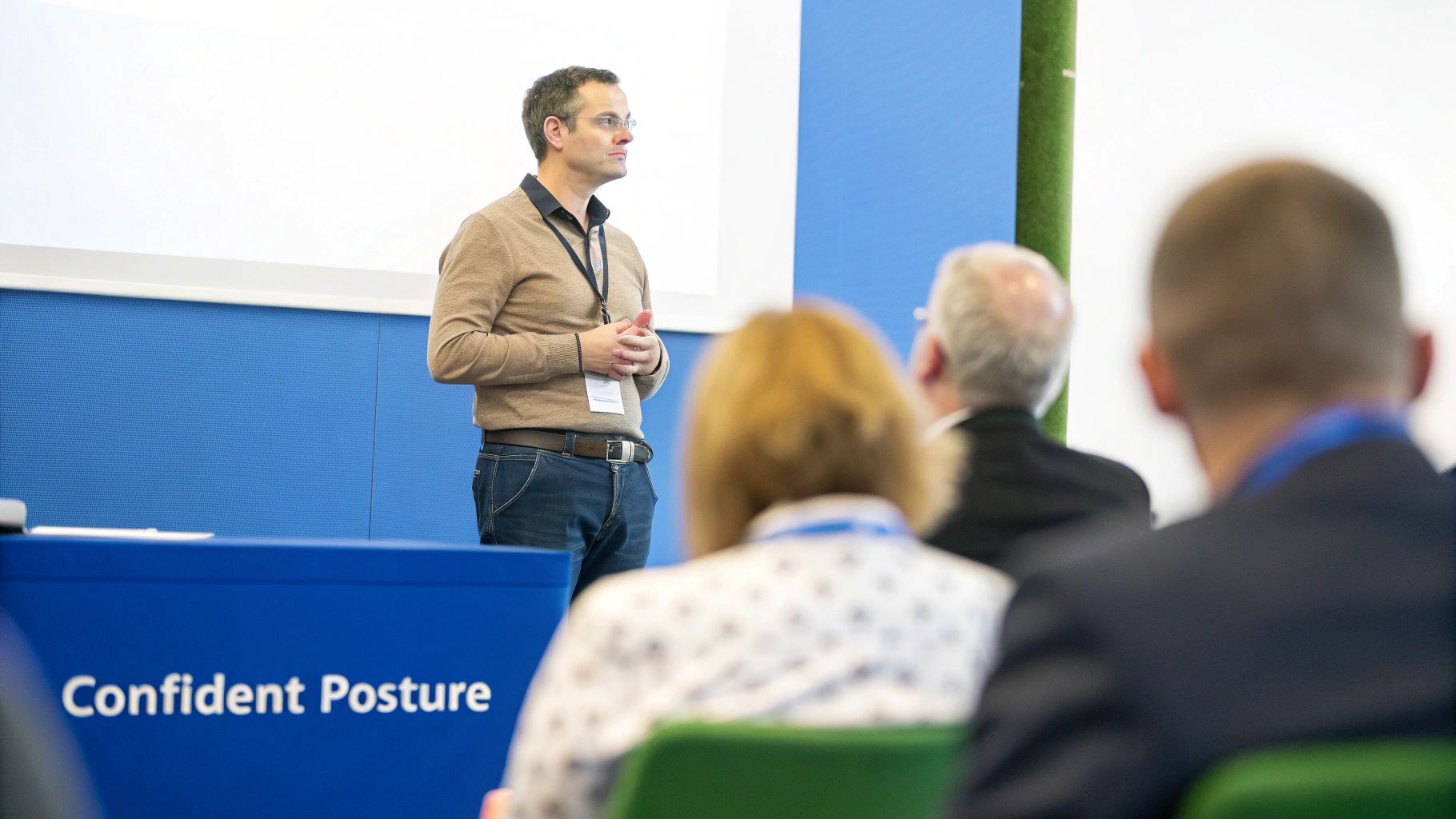
Confidence isn't just an internal feeling; it's a physical signal you broadcast to everyone around you. Once you’ve started rewiring your mindset, the next step is ensuring your physical presence matches that growing self-belief. Your posture, eye contact, and even your style choices say a lot before you even open your mouth.
This goes beyond just "standing up straight." It’s about occupying your space with intention. When you walk into a room with your shoulders back and head held high, you project a natural authority. This non-verbal communication subtly shapes how others see you—and more importantly, how you feel about yourself.
Master Your Physical Stance
Think about how you carry yourself during the day. Are you slouching at your desk? Making yourself smaller in meetings? These habits can slowly chip away at your confidence. The good news is, reclaiming your physical presence is a powerful way to turn that around.
Before your next big meeting, try this: find a private space and do a "power pose" for two minutes. Stand with your feet apart, hands on your hips, chin up. Research from social psychologist Amy Cuddy shows that holding these expansive postures can actually increase feelings of power and reduce stress.
Here are a few other ways to project presence all day long:
- Keep your posture open. Avoid crossing your arms or legs in meetings. It signals that you're receptive and solid in your position.
- Use purposeful gestures. Instead of nervous fidgeting, use deliberate hand movements to emphasize your points. It adds conviction to what you're saying.
- Nail the handshake. A firm, confident handshake with solid eye contact sets an authoritative tone from the first moment of interaction.
To truly command a room, especially in group settings, it’s a huge advantage to know how to guide the conversation. Looking into effective meeting facilitation techniques is an incredible skill for projecting that next level of authority.
The Surprising Link Between Style and Self-Assurance
What you wear has a direct line to your mindset. There’s even a term for it: "enclothed cognition." When you dress in a way that makes you feel capable and sharp, your behavior tends to follow. This isn't about buying expensive suits; it's about being intentional.
Your clothing doesn't just cover your body; it prepares your mind. Choosing an outfit that makes you feel authoritative can trigger a mental shift, boosting your performance and self-perception for the day.
Even small details can make a huge impact. For instance, a discreet lift from a pair of Conzuri’s height-boosting sneakers can instantly improve your posture. Unlike traditional brands, Conzuri designs modern silhouettes that blend seamlessly, so you get all the benefits without anyone knowing your secret. That subtle change creates a more commanding physical presence, which in turn fuels your internal sense of confidence.
At the end of the day, projecting authority is a holistic practice—it’s about getting your mind and body working together to show the world what you're truly capable of.
Close the Skills Gap to Build Real Competence
That shaky feeling before a big presentation? That isn't a personality flaw. It’s often a competence issue. True, unshakeable confidence isn't manifested out of thin air; it’s earned. It's forged in the fire of knowing you have the skills to handle whatever comes your way.
If you’ve ever felt like you're faking it, you're in good company. An eye-opening report from ADP found that only 24% of the global workforce feels confident they have the skills needed for the future of their careers. That’s a huge gap between ambition and reality, but it’s also a massive opportunity for anyone willing to put in the work.
This isn't about collecting certificates. It’s about strategically building undeniable proof of your own value and shutting down the inner voice that whispers you’re not ready.
Create Your Personal Development Roadmap
Vague goals like "get better at my job" are useless. They’re a recipe for procrastination. To build real competence, you need a sharp, actionable plan that targets the exact skills that will move the needle.
First, get specific. Stop guessing what you think you need to learn.
- Analyze Job Descriptions: Pull up job descriptions for your current role and the one you want next. What software, methodologies, or soft skills keep popping up? That’s your hit list.
- Seek Honest Feedback: Ask a trusted manager, "If I could develop one new skill, which one would make the biggest impact on the team?" This cuts through the noise and gives you a clear starting point.
- Volunteer Strategically: Don’t just raise your hand for more work. Volunteer for projects that force you to practice the skills you want to build. Offer to help with data analysis. Ask to co-lead a client presentation. These are low-stakes ways to get real, hands-on reps.
When you actively pursue professional development and apply solid staff training best practices to your own growth, you send a powerful signal to leadership that you're not just waiting for a promotion—you're building yourself into the person who deserves it.
Communicate Your Growth
Here's a hard truth: developing new skills is only half the battle. If no one knows about it, it doesn't count for much in your career. You can’t assume your boss is keeping a detailed scorecard.
Competence without communication is like working in the dark. You might be brilliant, but if no one sees it, it doesn't translate into career momentum. You have to make your progress part of the conversation.
In your next one-on-one, frame your progress with confidence. Ditch the timid, "I'm trying to learn a bit more about X."
Instead, try this: "I've been actively developing my skills in data analytics and was able to apply them to the quarterly report by identifying a new trend in customer behavior." See the difference? One is a wish; the other is a fact.
This proactive approach doesn't just build your own self-assurance—it repositions you as a high-value, forward-thinking member of the team. As you feel more competent, you’ll naturally carry yourself with more authority—a key idea we explore in our guide on how to look taller in shoes and project a stronger physical presence.
Communicate Your Ideas With Clarity And Conviction

Great ideas are worthless if they stay locked in your head. The final piece of the confidence puzzle is making sure your voice is heard—and respected. It’s about speaking with conviction, contributing when it counts, and making sure your insights land with impact.
This isn’t about being the loudest person in the room. It’s about being the clearest. Assertive communication is a skill you can build, not a personality trait.
Trade Uncertainty for Declaration
The words you choose broadcast your confidence level. We’ve all heard it—the tentative phrasing that drains authority from a great idea and practically invites people to dismiss it. It's time to kill the verbal hedging.
Instead of saying:
- "I think maybe we could try..."
- "This might be a silly idea, but..."
- "I just feel like we should perhaps..."
Make the shift to direct, declarative language:
- "My recommendation is to..."
- "Here's my perspective..."
- "Based on the data, our best path forward is..."
This is a subtle linguistic change that reframes you from a hesitant participant to a strategic contributor. Small tweak, massive difference in perception.
Key Takeaway: Confident communication isn't about pretending you have zero doubts. It's about not leading with them. State your conclusion first, then back it up with reasoning. This projects authority and keeps the conversation clear.
To make sure your conviction translates from spoken words to written ones, smart professionals are finding new ways to work efficiently. For example, many are incorporating speech-to-text into your daily workflow to increase productivity, which helps them capture their thoughts clearly and quickly, turning conviction into documentation without losing momentum.
Master High-Stakes Scenarios
Knowing what to say is one thing. Delivering it when the pressure is on is another. True confidence shows up in those tough, real-time moments. Let’s walk through a couple of common ones.
Scenario 1: You Get Interrupted
Instead of letting your point dissolve, calmly reclaim your turn. A simple, firm, "I'd like to finish my thought," does the job. It's not aggressive; it's assertive. You are taking back the space you’re owed.
Scenario 2: You Need to Disagree with a Senior Colleague
This can feel like walking on eggshells, but it doesn't have to. The key is to frame your disagreement as a collaborative build, not a takedown. Try this framework: "I agree with [mention a point of agreement]. I have a different perspective on [the specific part you see differently], based on [your evidence or logic]. What are your thoughts on that approach?"
This shows you’re listening and offering a well-reasoned alternative, not just poking holes. Professional poise requires all-day presence, and feeling solid from the ground up can make a surprising difference. Knowing the ultimate guide to comfortable dress shoes for work can help you maintain that physical composure, giving you one less thing to worry about during critical conversations.
Build Your Network to Amplify Your Value
Doing great work is only half the battle. If nobody knows about it, does it even count? Once you’ve sharpened your skills, mindset, and communication, the final step is ensuring your value gets seen.
This is where your professional network comes in. This isn't just about collecting LinkedIn connections. It’s about building a system of allies—people who will vouch for your work when you’re not in the room.
Forget the transactional, "what can you do for me" approach. Real networking is about genuine relationships. Take an authentic interest in what your colleagues are working on. Offer to help before they ask. These small deposits of goodwill build a foundation of trust and create a support system that naturally magnifies your impact.
Track Your Wins and Learn to Talk About Them
Let’s be honest: your manager is swamped. They aren't keeping a detailed log of your successes. That's your job. If you want to feel more confident, you have to become the chief archivist of your own accomplishments. This isn't about being arrogant; it's about being prepared with facts.
Keep a running document of your wins—both big breakthroughs and small improvements. The key is to quantify everything you can.
- Don't say: "I improved a report."
- Instead, try: "I streamlined the weekly reporting process, which now saves our team 3 hours every week."
See the difference? This simple habit turns a subjective performance review into an undeniable presentation of your value. You're not just saying you're good at your job; you're bringing the receipts.
Your career story is yours to write. By consistently tracking what you contribute, you're not just preparing for a review. You're building a rock-solid case for your own advancement and backing up your self-worth with cold, hard data.
When you can present these facts clearly, you demonstrate your worth without ambiguity. This strategic visibility is the final, critical step in building confidence that no one can shake. It’s about making sure the authority you’ve worked so hard to cultivate is recognized.
This complete approach—marrying internal skill with external presence—truly makes a difference. Even the tools you use, like finding the best elevator shoes for men, fit into this bigger picture. They support a physically confident posture, which in turn helps you present your documented successes with more authority.
When you know your worth and have the proof to back it up, your confidence becomes undeniable.
Got Questions? People Also Ask…
Putting new strategies into practice always surfaces new questions. It's a sign you're actually doing the work. Here are some honest answers to common questions about building professional confidence.
How Can I Build Confidence at Work Quickly?
While deep, lasting confidence takes time, you can get a quick boost by focusing on your physical presence. Before your next meeting, try this: stand up straight, pull your shoulders back, and take a few deep breaths. This small adjustment in posture, known as a "power pose," can genuinely make you feel more assertive and in control almost instantly. It’s a fast, effective way to project confidence before you even say a word.
What If I Still Feel Like an Imposter?
First, know that it’s normal. Imposter syndrome is stubborn, and even the most accomplished people deal with it. It’s not a sign you’re failing; it’s a sign you’re pushing your boundaries.
When that feeling hits, don't argue with it. Instead, pull out the cold, hard facts. This is where that "brag file" we talked about becomes your secret weapon. Open it up and review your documented wins and the positive feedback you’ve received.
The goal isn't to make the feeling disappear forever. It’s to learn to see it for what it is—an emotional reaction, not a reflection of reality. Your achievements are the facts. Stick to those.
Are Elevator Shoes Noticeable?
This is the most common (and completely fair) question we get. We all have an image of old-school "lifts" that looked clunky and obvious.
That’s not the case anymore. Modern elevator shoes are engineered for total discretion. Unlike brands such as Guidomaggi or Chamaripa, which can sometimes have bulky heels, Conzuri builds the height-boosting technology right into the shoe’s internal structure, so it’s completely invisible from the outside.
To everyone else, they just look like a pair of premium, well-designed sneakers. This lets you get the benefits—the improved posture, the stronger presence, that little bit of an edge—without anyone knowing your secret.
Ready to build your confidence from the ground up? The first step is feeling solid in your presence and posture. Conzuri designs footwear that gives you a discreet, stylish lift to help you stand taller and project the authority you’ve earned.
Explore the full collection of Conzuri’s height-boosting shoes and find your perfect pair today.
Recent Articles


