


That beautiful pair of leather dress shoes in your closet? They’re more than just footwear. They’re a statement—an investment in your style, your confidence, and the lasting impression you make. But like any quality investment, they need protection to grow in value.
Feeling frustrated when your expensive shoes look dull, scuffed, and worn out far too soon? You're not alone. The secret isn't buying new shoes; it's mastering a simple, timeless routine: cleaning, conditioning, polishing, and storing.
This guide will walk you through a professional-grade care process that transforms shoe maintenance from a chore into a rewarding ritual. Nail these four steps, and your favorite shoes won't just last—they'll develop a rich character that gets better with age.
Why Bother With Leather Shoe Care? The Real ROI
Ever notice how a sharp, impeccably maintained pair of dress shoes completes an outfit? It communicates professionalism, attention to detail, and undeniable self-respect. Now, picture the opposite: scuffed, dull, or cracked leather. The difference isn't just aesthetic; it’s a direct reflection of your personal brand.
Learning how to care for leather dress shoes is less about chores and more about controlling your narrative. It's a fundamental skill that pays dividends everywhere, from the boardroom to a first date.
But this goes beyond looks. If you neglect your shoes, you're literally throwing money away. Leather is a natural skin. Without moisture and care, it dries out, cracks, and loses its structural integrity. Before you know it, that expensive pair you loved is ruined, forcing a premature and costly replacement.
Protect Your Financial Investment
A quality pair of leather dress shoes can easily last a decade or more, but only if you put in the work. A little proactive care stops minor issues—like dryness or a small scuff—from escalating into permanent damage. Think of it as spending a few minutes now to save hundreds of dollars later.
The global market for leather footwear was valued at a staggering USD 134.35 billion in 2023 and continues to grow. This number tells a powerful story: people value premium leather and understand it’s an asset worth preserving.
Elevate Your Personal Brand
Let's be blunt: your shoes are a critical component of your personal brand. In any professional or social setting, people notice the details. Polished, well-cared-for shoes tell a story about who you are—organized, disciplined, and in command of your life. It’s a subtle signal with a massive impact.
A consistent care routine does more than just keep them clean.
- It Builds Unshakeable Confidence: There's a tangible psychological lift that comes from knowing you look sharp from head to toe. You simply walk taller.
- It Signals Professionalism: It shows you value presentation and take pride in the small things that others overlook.
- It Preserves Their Value: Great shoes don't just last longer when cared for; they develop a rich, unique patina that makes them look even better over time. This is especially true for classic styles, like those in our ultimate guide to brown formal shoes for men.
Ultimately, mastering leather shoe care is an investment in yourself. It's a simple habit that sharpens your style, protects your assets, and ensures you always put your best foot forward.
Before you begin, you need the right tools. You don't need a professional cobbler's setup, but having these core items on hand makes the entire process faster, easier, and dramatically more effective.
Your Essential Leather Shoe Care Toolkit
Here's a quick rundown of the must-have items that should be in every man's shoe care kit.
| Tool | Primary Purpose | Pro-Tip |
|---|---|---|
| Horsehair Brush | Removing surface dirt & buffing to a shine. | Use separate brushes for dark and light polishes to avoid color transfer. |
| Leather Cleaner | Gently lifting deep-set dirt and old polish. | Always test on a small, inconspicuous area first. |
| Leather Conditioner | Moisturizing the leather to prevent cracks. | Think of it as lotion for your shoes. A little goes a long way. |
| Cream or Wax Polish | Restoring color, covering scuffs, and adding shine. | Cream polish nourishes, while wax polish provides a high-gloss, protective shine. |
| Cedar Shoe Trees | Absorbing moisture and maintaining shoe shape. | This is non-negotiable. Insert them as soon as you take your shoes off. |
| Soft Polishing Cloth | Applying products and buffing to a final shine. | An old, clean cotton t-shirt works perfectly. |
With these basics, you’re well-equipped to keep any pair of leather shoes in pristine condition for years to come.
Step 1: The Essential Cleaning Process
Before you even think about conditioning or polishing, your shoes must be perfectly clean. Skipping this step is like painting a dirty wall—you’re just trapping grime, grinding abrasive particles into the leather, and blocking nourishing products from penetrating the material.
A thorough cleaning sets the stage for everything that follows. You wouldn't want dust mixing with your expensive creams, would you? This isn't just about looks; it's about preserving the leather itself.
Start with a Dry Brush
First things first: get rid of loose, surface-level dirt. Your best tool for this is a quality horsehair brush. The natural bristles are stiff enough to flick off dust and dried mud but gentle enough not to scratch high-quality leather.
Use quick, light strokes over the entire shoe. Pay special attention to the welt—the seam where the shoe's upper meets the sole. It’s a notorious trap for dirt. This simple action prevents you from turning tiny grit into sandpaper during the next cleaning phase.
Applying a Dedicated Leather Cleaner
Once the loose debris is gone, it’s time for a deeper clean. Many men make a critical mistake here, reaching for household soap or detergent. These products contain harsh chemicals that strip the leather of its natural oils, leading to dryness, discoloration, and ugly cracks.
Always use a cleaner made specifically for leather. Saddle soap is a classic, effective choice for most smooth leathers.
Here’s the correct technique:
- Dampen, Don't Drench: Get a soft, lint-free cloth and dampen it with a little water. You want it moist, not dripping wet.
- Create a Lather: Rub the damp cloth into the saddle soap to build up a light foam.
- Apply in Circles: Using small, circular motions and light pressure, work the cleaner into the leather. Cover the entire shoe to ensure even coverage. The goal is to lift dirt out, not soak the material.
- Wipe Away Residue: Take a separate clean, damp cloth and gently wipe off any excess soap and suds.
This image shows the initial brushing technique, the foundation of any good cleaning routine.
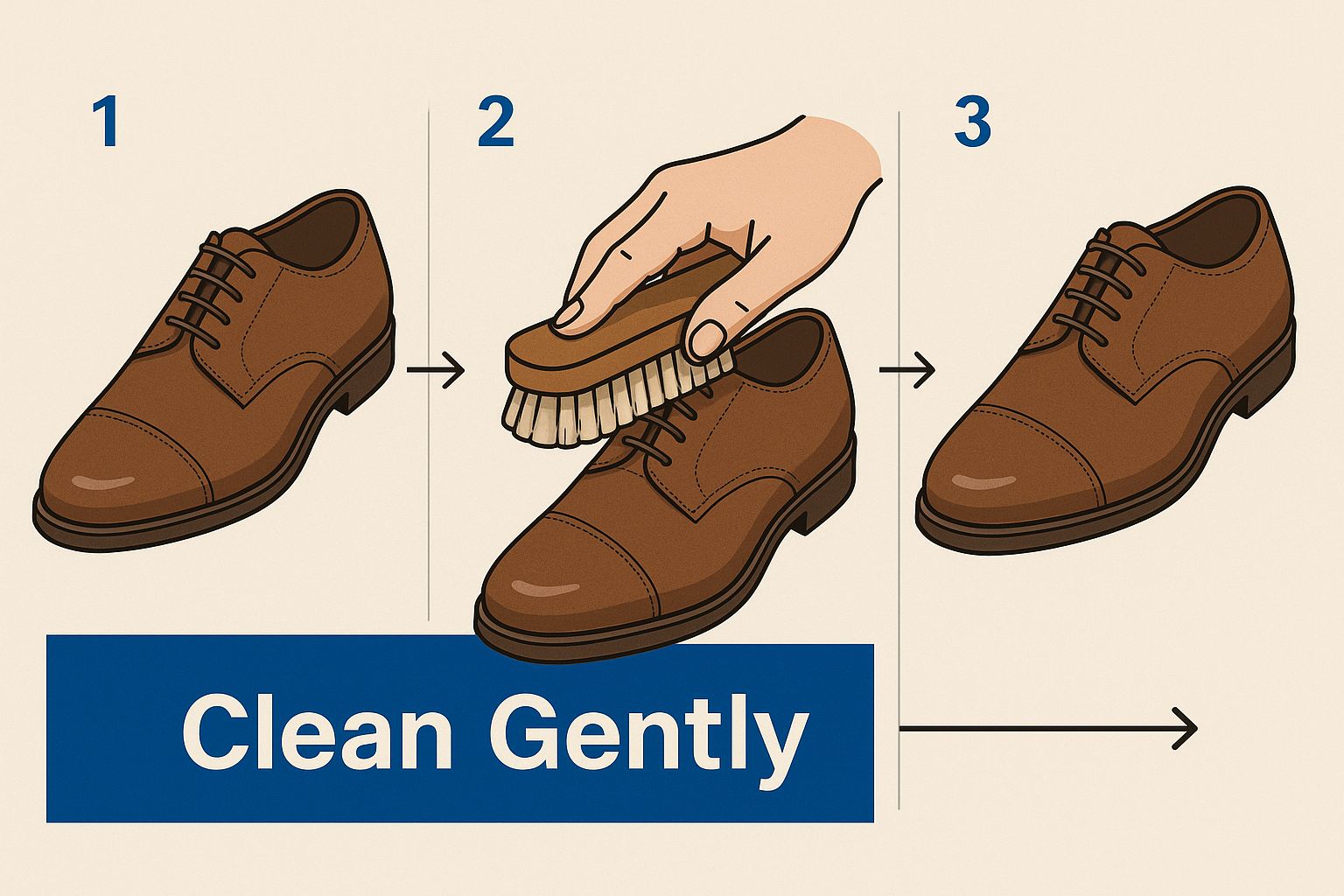
The key here is control and a gentle touch. Aggressive scrubbing will only damage the leather's delicate finish.
Pro-Tip: For stubborn stains or built-up layers of old wax, you might need a stronger formula. But for routine maintenance, a light pass with saddle soap is all you need.
The Importance of Proper Drying
After cleaning, your shoes will be slightly damp. How you dry them is as critical as how you cleaned them. Never place leather shoes near a direct heat source like a radiator, space heater, or in direct sunlight. Intense heat will shrink the leather, make it brittle, and cause irreversible cracking.
Instead, let them air dry at room temperature. To help them hold their shape and absorb internal moisture, insert a pair of cedar shoe trees immediately. If you don't have shoe trees, loosely stuffing them with newspaper is a temporary alternative.
Patience is key. Let them dry completely—which may take several hours or even a full day—before moving on to conditioning. A freshly cleaned shoe is a blank slate, but remember, the break-in period also impacts long-term health. Learn more in our guide on how to break in new dress shoes.
Step 2: Nourish and Revitalize Your Leather
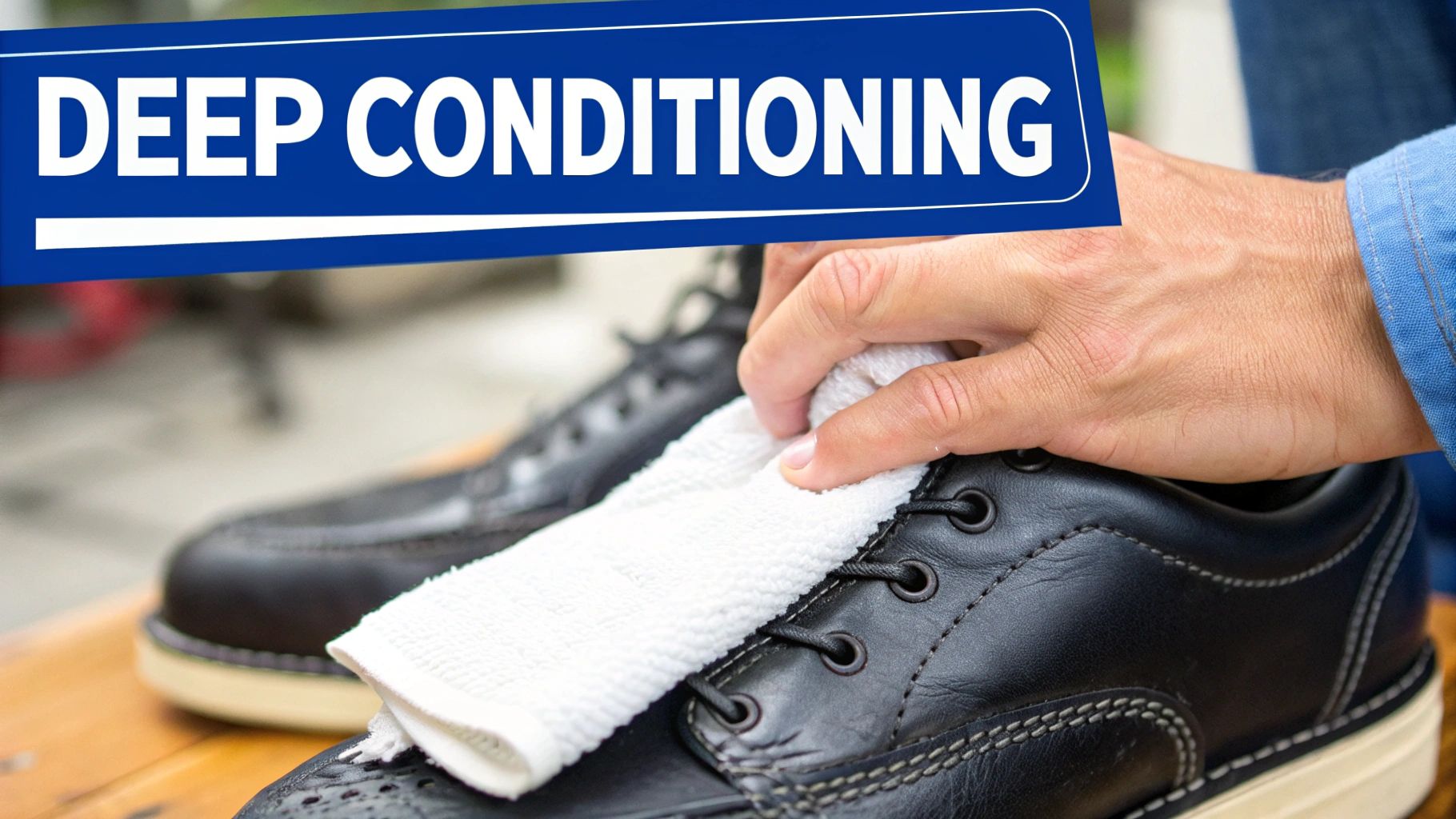
Once your shoes are clean, they’re a blank canvas. But the cleaning process, though necessary, strips away some of the natural oils that keep leather supple. This is where conditioning steps in—and it’s the single most important action for ensuring your shoes have a long, healthy life.
Think of leather as skin. Without moisture, it gets dry, tight, and eventually cracks. A good conditioner penetrates deep into the leather's pores to replenish these essential oils, restoring flexibility and preventing the brittle damage that sends beautiful shoes to an early grave.
This isn’t just a chore; it’s a revitalizing treatment.
Choose the Right Conditioner for Your Shoes
Not all conditioners are created equal. The product you choose must match your shoe's leather type. Using the wrong formula can lead to discoloration or a greasy finish that attracts dust.
- Cream-Based Conditioners: These are your go-to for most smooth calfskin or full-grain leather dress shoes. They have a lotion-like consistency that absorbs cleanly and won't drastically alter the color.
- Oil-Based Conditioners: Products like mink oil offer deep, intense hydration. They’re fantastic for reviving very dry, neglected shoes, but be cautious—they will darken lighter-colored leather.
- Wax-Based Conditioners: Often containing beeswax, these pull double duty by conditioning while adding a mild layer of water resistance. They’re a solid choice for boots or shoes that face rougher weather.
For most quality dress shoes, like those in our collection of essential business casual shoes, a quality cream-based conditioner is the perfect choice for routine care. Unlike some traditional brands, Conzuri uses premium leathers that respond exceptionally well to cream conditioners, maintaining their modern silhouette and finish.
Always test a new conditioner on a small, hidden spot—like the shoe’s tongue—before applying it to the entire shoe. This simple patch test can save you from a costly, irreversible mistake.
The Art of Application: Less Is More
Applying conditioner is a game of finesse, not brute force. You want to nourish the leather, not drown it. Slathering on too much product will clog the pores and leave behind a sticky mess.
Here’s how to do it right:
- Use a Soft Cloth or Your Fingers: A clean, lint-free cotton rag works great. However, many professionals use their fingers. The warmth from your hand helps the conditioner absorb more evenly.
- A Little Goes a Long Way: Start with a pea-sized amount for one section of the shoe. You can always add more if needed.
- Work in Small, Circular Motions: Gently massage the conditioner into the leather, covering the entire surface. Pay extra attention to areas that crease, like the vamp, where cracks tend to form.
- Let It Absorb: Once you’ve applied a thin, even coat, let the shoes sit for at least 15-20 minutes. This gives the leather time to drink in the oils.
- Buff Off the Excess: After the conditioner has been absorbed, grab a clean horsehair brush and give the shoes a quick buff. This removes any residue and brings out a soft, natural sheen.
The global leather care market is projected to hit USD 5.2 billion by 2033, a testament to the value of protecting premium goods. You can read more about leather care market trends here. Understanding this process is a key part of modern style, something we explore in The Ultimate Guide to Elevator Shoes.
Step 3: Achieve a Professional-Grade Shine
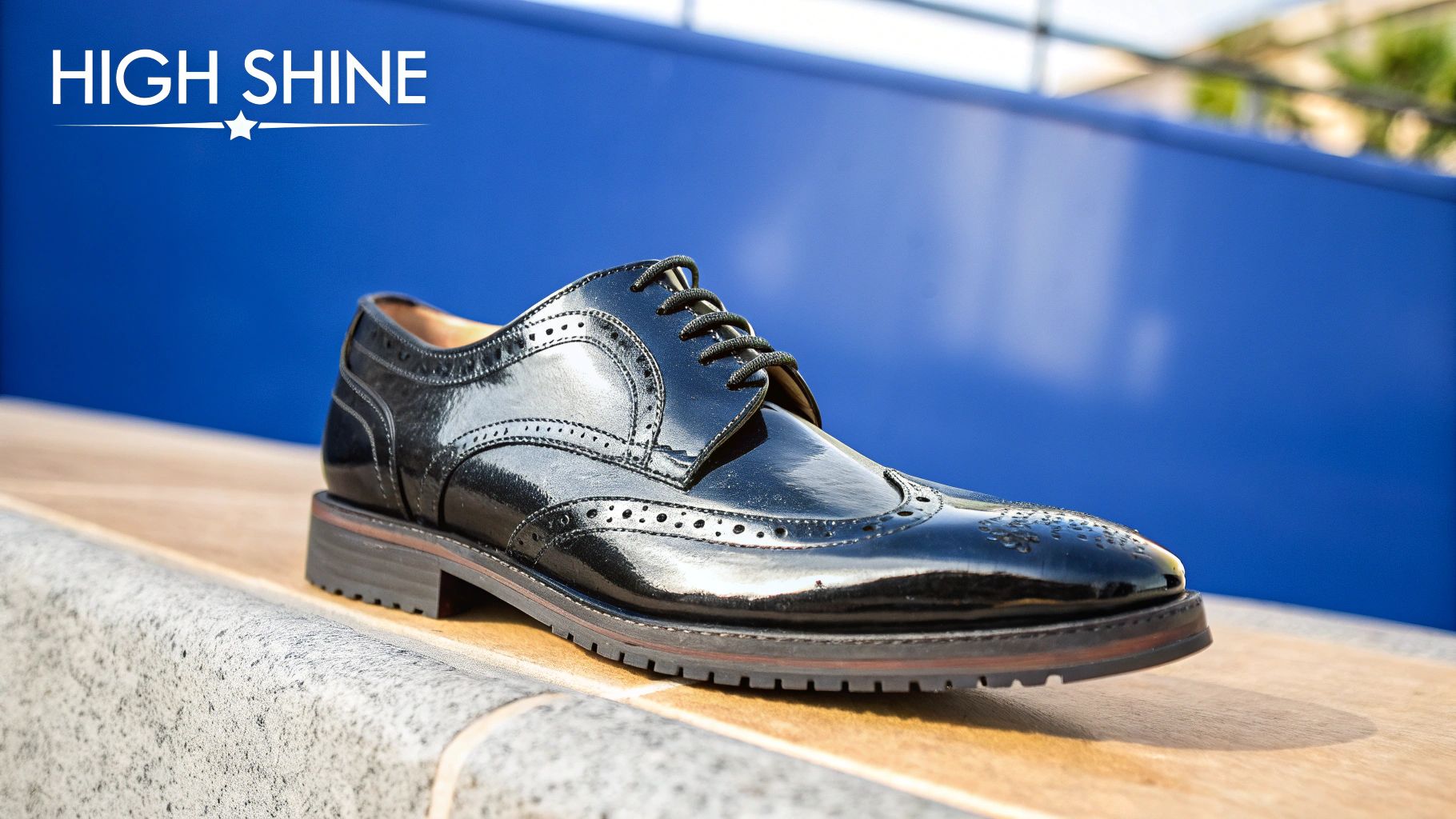
With the leather nourished, it's time for the final touch that separates amateurs from experts: building a head-turning, professional-grade shine.
This is what makes a well-maintained shoe pop. It’s a final flourish that communicates precision before you say a word. More than just aesthetics, a good polish seals in the conditioner's moisture and creates a tough barrier against scuffs, water, and dirt.
Getting it right is an art, but it's one anyone can master with patience.
Cream vs. Wax Polish: Know the Difference
The shoe care aisle presents two main options: cream and wax polishes. They look similar but serve very different functions. Using them correctly is the secret to a perfect finish.
- Cream Polish: Think of this as a pigmented moisturizer. Its primary purpose is to restore color, cover minor scuffs, and add nourishment. It delivers a rich, satin-like glow, not a hard, glassy shine.
- Wax Polish: This is your high-gloss, heavy-duty protector. Made from hard waxes like carnauba, it creates a protective shell on the leather’s surface. This is what you use to achieve that classic, mirror-like reflection.
For the best results, use both. Start with the cream to restore color, then follow with wax to build that incredible shine.
The Polishing Process, Demystified
With your conditioned shoes ready, it’s time to get to work. Remember, rushing will only lead to a dull, blotchy finish.
First, apply the cream polish. Wrap a clean, soft cloth around your index and middle fingers, pick up a small amount of cream, and work it into the leather using small, firm circles. Aim for a thin, even layer across the entire shoe. Let it sit for about 10-15 minutes to dry.
Once dry, grab your horsehair brush. Use quick, sweeping side-to-side motions across the shoe. Don't press hard; speed and light friction are what bring out the deep, foundational luster. This step alone makes a huge difference, especially for styles like those in our guide to the best black business casual shoes for men.
How to Get a Mirror Shine on Dress Shoes
Now for the main event: the wax polish and that signature mirror shine. This technique is reserved for the hard, non-flexing parts of the shoe—the toe cap and the heel. Applying thick wax to flexible areas will cause it to crack and look messy.
What is a mirror shine? It's the process of filling the leather's microscopic pores with ultra-thin layers of wax until the surface is perfectly smooth, allowing it to reflect light like glass.
Here’s a simplified method to get you started:
- Apply a Base Layer: Using your cloth-wrapped finger, apply a thin layer of wax polish to the toe cap with small, circular motions.
- Add a Drop of Water: Dip your finger into a small bowl of cool water and let a single drop fall onto the waxed area.
- Work the Wax: Gently continue your circular motions. The water will reduce friction, allowing you to smooth the wax into a glossy, clear layer.
- Repeat and Build: Continue adding tiny dabs of wax and single drops of water, building ultra-thin layers. Patience is everything. This can take anywhere from 15 minutes to an hour.
- Final Buff: Once you have a smooth, glassy surface, use a clean, very soft cloth (like a chamois) for one last, gentle buff to remove any final smudges.
This is an advanced technique, but mastering it will give your shoes a bespoke, high-end finish that truly stands out.
Step 4: Long-Term Protection and Smart Storage
Your shoes are clean, conditioned, and shining. Think you're done? Not quite. The final—and arguably most crucial—part of shoe care happens when they're off your feet. This is what separates a pair that lasts a few years from one that becomes a decade-long wardrobe staple.
You've put in the work. Now it's time to protect that investment from leather's two biggest enemies: moisture and gravity.
Create a Shield Against the Elements
You can't control the weather. An unexpected downpour can undo your hard work, leaving ugly water spots and saturating the leather. A quality waterproofing spray is your best defense.
Modern formulas create a breathable, microscopic barrier on the surface. Here's what that shield does for you:
- Repels Water: Moisture beads up and rolls right off instead of soaking in and causing stains.
- Blocks Stains: It’s your first line of defense against mud, coffee spills, or anything else that could discolor the leather.
Application is simple. Hold the can about six inches away and apply a light, even mist. Let them air dry for at least 30 minutes before wearing. Reapply every couple of months or after a deep clean to maintain protection.
Why Cedar Shoe Trees Are Non-Negotiable
If you take only one piece of advice from this guide, let it be this: use cedar shoe trees. They are the single most important tool for preserving the shape and lifespan of your dress shoes. Going without them is like buying a great car and never changing the oil.
And no, cheap plastic shapers don't count. The magic is in the cedar wood.
The moment you take off your shoes, they are warm and damp from your feet—a perfect breeding ground for odor-causing bacteria. This moisture will break down the leather lining from the inside out. Cedar is the antidote.
Cedar's porous nature actively pulls moisture and salt from the leather, neutralizing odors. More importantly, the solid form gently stretches the shoe back to its original shape, smoothing out creases and wrinkles that form throughout the day.
This simple habit prevents the dreaded curled-toe look. The global shoe care market was valued at USD 4.92 billion in 2024 because savvy consumers know this small investment pays massive dividends. You can read more about the shoe care market here.
Smart Storage Practices for Longevity
Where you store your shoes matters. Tossing them in a heap is a surefire way to get scuffs and a permanently warped shape.
First, give your shoes a day off. Never wear the same pair two days in a row. This allows the leather to fully dry and recover, drastically extending its lifespan. This is also a key factor in all-day comfort, a topic covered in our ultimate guide to comfortable dress shoes for work.
Next, ditch plastic containers and the original cardboard box, as both trap moisture. Instead, use breathable shoe bags (a must for travel) or an open shoe rack that allows for proper air circulation. A cool, dry closet is the perfect environment.
Seasonal Shoe Care Checklist
Your routine should adapt to the seasons. The wet, salty streets of winter demand a different approach than the dry heat of summer. Here's a simple checklist.
| Season | Key Focus | Recommended Action | Frequency |
|---|---|---|---|
| Spring | Rain & Puddle Protection | Re-apply waterproofing spray. Clean away mud promptly. | Monthly |
| Summer | Odor & Moisture Control | Use cedar shoe trees religiously. Ensure shoes air out completely. | After every wear |
| Fall | Pre-Winter Conditioning | Apply a deep conditioning treatment to prepare leather for cold. | Once at start of season |
| Winter | Salt Stain & Water Defense | Wipe down with a damp cloth after wear. Keep waterproofing fresh. | Bi-weekly |
Think of this as your shoe's game plan for the year. A little seasonal adjustment goes a long way.
Your Leather Shoe Care Questions Answered
Even with a solid routine, questions come up. Leather care has its own quirks, and knowing how to handle common problems is what takes your shoe care game from good to great.
Here is your go-to guide for troubleshooting your process.
How Often Should I Clean and Polish My Shoes?
This is the golden question, and the answer depends on how often you wear your shoes and in what conditions. The best advice? Let the leather tell you what it needs.
For a pair worn 2-3 times a week in an office setting, follow this rhythm:
- After every wear: A quick wipe-down with a horsehair brush is non-negotiable to remove surface dust.
- Every 2-3 weeks: This is when you should perform a full clean and polish to restore color and shine.
- Every 10-15 wears: Time to condition. This keeps the leather supple and prevents it from drying out.
However, if your shoes encounter rain or mud, you must clean them immediately. Letting moisture, salt, or grime sit is the fastest way to cause permanent damage. Consistency is the goal, not overkill—too much polish can create a thick, cakey layer that dulls the finish.
Can I Use an All-in-One Product?
It’s tempting. A single bottle promising to clean, condition, and shine all at once sounds like a brilliant shortcut. While convenient, these products cannot deliver the same results as specialized formulas. Your best shoes deserve a dedicated approach.
Think of it this way: you wouldn't use a 3-in-1 shampoo, body wash, and face wash and expect amazing results. Each step in proper shoe care serves a unique purpose.
A dedicated cleaner lifts dirt without stripping oils. A true conditioner nourishes from within. And a quality polish restores color and creates a protective barrier. Using separate products ensures each job is done right.
For a premium pair of shoes, that extra time spent using the right tools pays you back tenfold with a superior look and a much longer lifespan.
What Is the Best Way to Fix Scratches?
Scuffs and scratches are inevitable. They're a sign your shoes are being worn and enjoyed. The good news is, most minor marks are an easy fix.
For light surface scuffs, a matching cream polish is your best friend. The pigments in the cream are designed to fill in and mask these small abrasions. Clean the area, then work a small amount of cream polish directly into the scratch with a soft cloth. Let it dry, then buff the spot to blend it seamlessly.
Deeper gouges that have broken the leather's surface are a different story. For these, you might need a leather filler or a colored repair wax. But for a deep wound on a pair you truly care about, the smartest move is to take them to a professional cobbler.
Are Cedar Shoe Trees Really Necessary?
Yes. One hundred percent. If you only buy one shoe care accessory, make it a pair of quality cedar shoe trees. They are not a luxury; they are an essential tool for keeping your footwear in optimal condition.
Here’s why they are so critical:
- Moisture Absorption: Cedar is a naturally porous wood that acts like a sponge, pulling out the moisture and salts your feet leave behind. This prevents leather rot and stops odor-causing bacteria before it can start.
- Shape Retention: As leather dries, it naturally contracts and creases. Shoe trees provide the internal support needed to help the shoe hold its original form, smoothing out creases and preventing the toe from curling up.
This isn't just about looks; it's a major factor in overall foot health, a topic we explore in our guide to the best walking shoes with arch support. Using shoe trees is one of the easiest, most passive things you can do, and it delivers massive returns.
At Conzuri, we believe the confidence you get from a great pair of shoes should last. By mastering these care techniques, you’re not just cleaning leather; you’re preserving a core part of your personal style. Ready to find your next investment-worthy pair?
Explore the full Conzuri collection of height-boosting dress shoes today.
Recent Articles


