


Ever felt like you could use an extra inch or two? You're not alone. It's not just about a number on a measuring tape; it's about the confidence that comes with it. It’s the feeling of walking into a room and naturally commanding more presence. This guide will show you how the best height increasing insoles offer a smart, discreet way to get that immediate lift, comfortably and invisibly.
We'll break down the science, the materials, and how to find the perfect fit—transforming your stance from the ground up.
The Secret to Standing Taller Instantly
The desire to stand a little taller is universal. It’s a subtle advantage that can impact everything from your professional life to your dating confidence. While some solutions are extreme, height-increasing insoles are the perfect, no-commitment starting point. They let you feel that boost instantly without any fuss.
More Than Just a Simple Lift: The Real Benefits
Good height insoles are engineered for much more than just elevation. They're designed to work with your body's natural mechanics, offering benefits that go way beyond a few extra inches.
Here’s what a quality insole really does:
- Instant Confidence Boost: This is the big one. Standing taller immediately changes how you feel about yourself and, in turn, how others perceive you.
- Improved Posture: A well-designed insole adds a subtle wedge that encourages you to stand straighter. This aligns your spine, reduces slouching, and can ease back and neck strain.
- Seamless Discretion: Unlike traditional brands with clunky lifts, modern designs are practically invisible. They fit snugly inside your sneakers, boots, or dress shoes.
- All-Day Comfort: Premium insoles use materials like memory foam and polyurethane for superior cushioning and shock absorption. Your feet will thank you.
A well-designed height insole isn't just about adding inches; it's about elevating your entire presence. It’s a subtle adjustment that can lead to significant shifts in confidence and self-perception.
Finding Your Starting Point with a Low-Risk Boost
Figuring out how to look taller in shoes is the first step. Insoles provide a flexible and affordable way to experiment with different lift levels. You can test drive what an extra inch or two feels like before deciding if you want a more permanent solution.
This approach puts you in control. Once you get used to the feeling, you might start looking into purpose-built footwear like elevator shoes for a more integrated and refined boost.
How Modern Height Insoles Actually Work
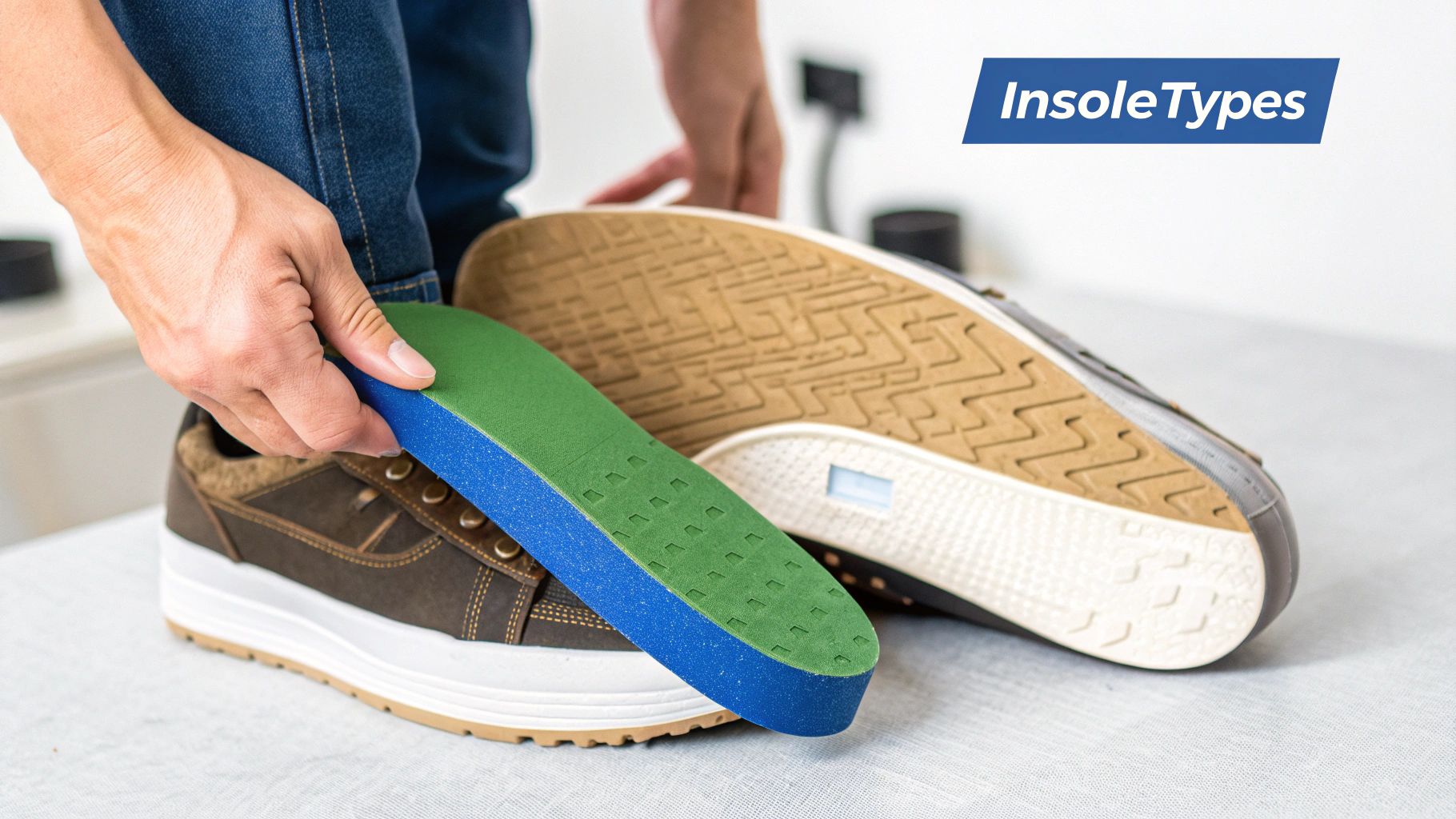
It’s easy to dismiss height insoles as simple foam blocks, but that couldn't be further from the truth. The best height increasing insoles are thoughtfully engineered. Think of them less like a filler and more like a car's suspension system. Their job isn’t just to add inches; it’s to absorb shock, distribute weight, and keep you comfortable.
At their core, these insoles use an ergonomic heel wedge to provide the lift. This isn’t a clunky platform. A well-designed wedge creates a gradual slope that elevates your heel without cramming your foot into an unnatural angle. This smart engineering separates a quality lift from a cheap, uncomfortable insert.
This design makes the lift feel like a natural extension of your shoe. It prevents the annoying forward slide and toe cramping that plague poorly made alternatives.
The Science Behind a Comfortable and Stable Lift
The real magic is in the materials and design, which work together to prevent foot fatigue. Let's break down the two main systems you'll find.
1. Solid Polyurethane Lifts
These are the workhorses. They’re firm, durable, and offer unwavering support. A solid lift compresses just enough under pressure but bounces right back. This resilience provides a stable platform that won’t flatten over time.
2. Adjustable Layered Systems
This type features multiple, stackable layers. This modular approach is fantastic for anyone new to lifts who wants to ease into the feeling. You can also fine-tune the height for different pairs of shoes.
This ergonomic engineering is the key difference between a standard shoe insert and a dedicated height insole. A regular insole might add cushioning, but a height insole is built to fundamentally and comfortably change your stance.
The demand for these smarter solutions is growing. The global shoe insoles market, which includes height-boosting designs, is expanding rapidly as consumers focus on foot health and comfort-driven solutions.
How Comfort and Discretion Work Together
Ultimately, a modern insole should give you a boost so seamless you forget it's there. This is achieved through key design principles:
- Smart Weight Distribution: By cradling the heel, the insole stops your weight from shifting onto the ball of your foot.
- Serious Shock Absorption: Quality materials like gel and dense foams absorb impact, taking stress off your joints.
- Anatomical Shape: The best height increasing insoles are contoured to mirror the natural shape of a human foot, giving you support where you need it.
Understanding these mechanics helps explain what a shoe lift is and how it does more than just add inches. Unlike brands that only focus on the height number, premium designs—like those built into Conzuri elevator shoes—put biomechanics first. This ensures comfort and support are never an afterthought.
Choosing the Right Materials for All-Day Comfort and Support
The material of your insole is everything. It's the single biggest factor dictating comfort, support, and durability. Think of it like buying tires. The rubber compound determines ride quality and whether you feel every bump in the road.
The best height increasing insoles balance cushioning and resilience. Cheap plastics or flimsy foams will collapse under your weight, leaving you with a lopsided mess. Premium materials are engineered to absorb impact and keep their shape day after day.
The Big Three: Which Insole Material is Best for You?
You'll see three materials pop up again and again. Each one offers a different feel and set of benefits.
- Memory Foam: This is all about plush, personalized comfort. Memory foam molds to the shape of your foot, distributing weight and reducing pressure points.
- Silicone Gel: The ultimate shock absorber. Gel is incredible at dampening the impact of each step, which is a lifesaver if you're walking on hard surfaces.
- Polyurethane (PU): The champion of firm, durable support. PU is a dense, tough foam that offers a stable, structured lift that refuses to compress over time.
Choosing the right material isn't about finding the "best" one—it's about finding the best one for you. An office worker might love memory foam, while someone on their feet for 8 hours needs the support of polyurethane.
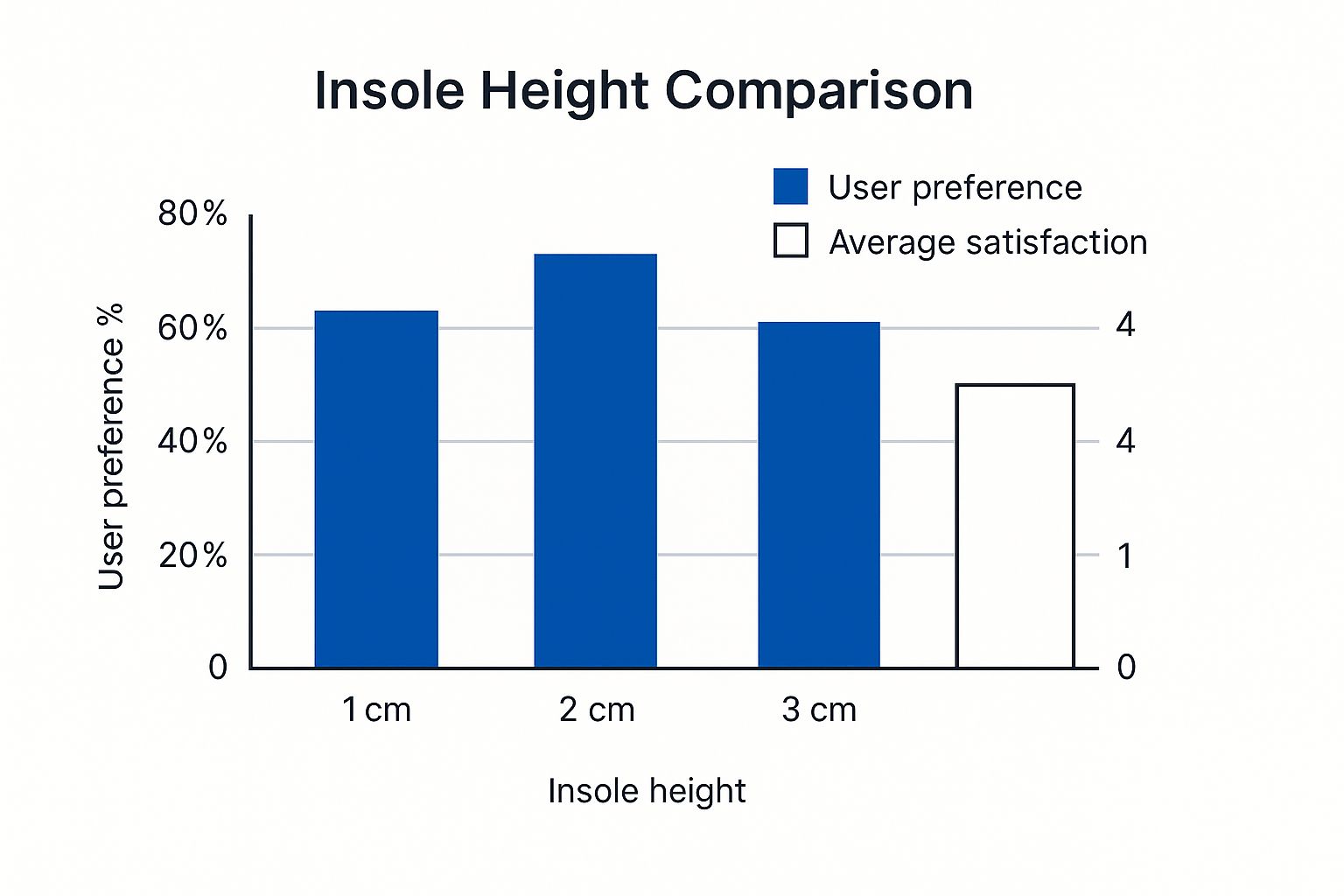
Data shows that while a 2 cm lift is popular, the 1 cm option often gets higher satisfaction ratings. This suggests that for daily wear, many prefer a subtle lift that prioritizes comfort.
Height Insole Material Comparison
Let's break down the pros and cons of each material in a simple chart.
| Material | Primary Benefit | Best For | Durability |
|---|---|---|---|
| Memory Foam | Custom-molded comfort | Office work, casual wear, reducing pressure points | Moderate |
| Silicone Gel | Superior shock absorption | Active lifestyles, walking on hard surfaces, athletics | Good |
| Polyurethane (PU) | Firm, unwavering support | All-day standing, demanding jobs, maximum longevity | Excellent |
The right choice comes down to what your average day looks like.
Match Your Insole Material to Your Lifestyle
How do you pick? Think about your daily routine. The demands on your feet will point you to the right material.
For the Office Professional
If your day is mostly sitting and walking on carpet, memory foam is your best friend. It provides that "ahh" feeling of relief inside dress shoes without needing heavy-duty support.
For the Active Individual
Always on the move? A silicone gel or a hybrid insole is the way to go. Its superior shock absorption protects your joints from the constant pounding on hard ground.
For All-Day Standing
For anyone in retail, hospitality, or healthcare, polyurethane is the undisputed winner. Its firm, structured support prevents arch fatigue and end-of-day foot ache. For more tips, check out our guide on the best shoes for standing all day.
While insoles are a great start, integrated solutions like Conzuri’s elevator shoes take this a step further. They are engineered from the ground up, combining layers of premium materials into one cohesive system for a discreet lift with uncompromising comfort.
Finding Your Perfect Fit and Height Boost
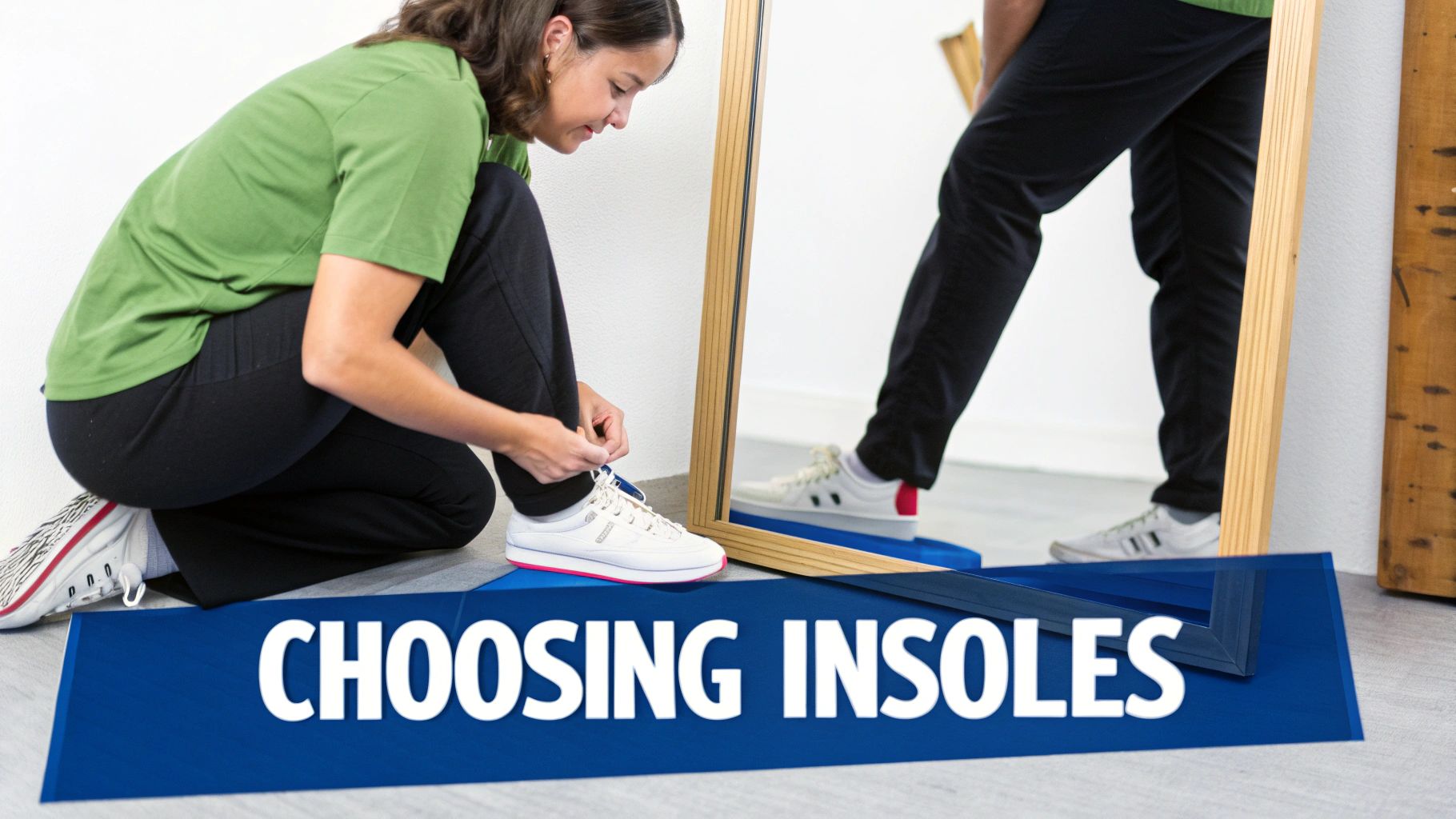
So you’ve picked your material. Now comes the part that makes or breaks the experience: getting the fit right. An ill-fitting insole is worse than no insole at all. It can cause heel slip, cram your toes, and create an awkward feeling that defeats the purpose.
Nailing your fit is a careful balancing act between the height you want, the shoes you wear, and the shape of your foot. Get this right, and your boost will feel stable, natural, and invisible.
Matching Insoles to Your Shoe Type for a Discreet Lift
Not all shoes can handle a lift. Trying to cram a 3-inch insole into low-profile loafers is a recipe for disaster. The secret is matching the insole's height to the shoe's internal space and ankle support.
Here’s a quick guide:
- Low-Profile Shoes (Loafers, Dress Shoes): These have the least room. Stick to a subtle lift, around 1 to 1.5 inches (2.5-3.8 cm), to keep your heel from popping out.
- Mid-Top Shoes (Sneakers, Casual Shoes): Your everyday sneakers are usually perfect for a 1.5 to 2.5-inch (3.8-6.3 cm) lift. Their design provides enough ankle support to keep your foot secure.
- High-Top Shoes (Boots, High-Top Sneakers): This is where you can go for the maximum boost. The high ankle coverage in boots easily handles a 2.5 to 3-inch (6.3-7.6 cm) lift.
The golden rule is simple: the more ankle coverage, the more height you can add discreetly. The most common mistake is forcing too much lift into a low-cut shoe.
Fixed vs. Adjustable Height: Which is Better for You?
As you shop for the best height increasing insoles, you’ll see two main types: fixed-height and adjustable. Each has its pros and cons.
A fixed-height insole offers one solid, non-adjustable lift. This design is usually the most stable and durable. It's a great choice if you know exactly how much height you want and plan to leave it in one pair of shoes.
Adjustable insoles come with several stackable layers to customize your boost. This flexibility is awesome for beginners testing different heights or for fine-tuning the lift for different shoes. The trade-off? They can sometimes feel less stable than a solid insole.
The Trim-to-Fit Advantage for a Perfect Match
One of the best features to look for is a trim-to-fit design. Since shoe sizes aren't consistent, these insoles come with pre-marked guidelines. Simply trim the front part of the insole with scissors for a perfect, custom fit. This ensures it sits flush inside your shoe without bunching up.
It’s a small detail that makes a huge difference in comfort. For a deeper look at how different lift amounts feel, our guide on understanding shoe lift height has you covered.
It's no surprise that the broader foot orthotics market, valued at $4.22 billion in 2024 by Fortune Business Insights, is booming. This trend shows a clear shift toward products that offer both a cosmetic boost and genuine ergonomic support.
While insoles are a fantastic option, the need to trim and swap them can be a hassle. That's why an integrated solution—like Conzuri’s elevator sneakers—is often a much better choice. They’re engineered with the lift built-in, which means no guesswork and no fit issues, ever.
The Hidden Benefits Beyond Just Adding Inches
Sure, the most obvious win is what you see in the mirror. But the real change happens below the surface—in how you carry yourself, how you feel, and even your long-term physical health. A well-designed insole re-engineers your stance from the ground up, creating a ripple effect of positive changes.
Unlocking Better Posture and Physical Comfort
One of the first things you'll notice is an improvement in your posture. The gentle heel lift encourages your spine to align correctly, prompting you to pull your shoulders back and stand straighter.
This small adjustment can have a huge impact:
- Reduces Back Strain: Proper alignment takes pressure off your lower back, a common pain point.
- Creates a Commanding Stance: Standing tall projects confidence and authority in professional and social settings.
- Enhances Core Engagement: A straighter posture naturally engages your core muscles, improving stability.
The global demand for height increasing insoles is on track to hit $309 million in 2025, according to Market Report Analytics, largely fueled by awareness around posture correction. People want solutions that offer more than a cosmetic boost; they want to fix issues like back pain.
A quality insole stops being a simple accessory and becomes a powerful tool for self-improvement. It's not about faking it; it's about building a better physical foundation that supports a more confident you.
The Psychological Edge of Standing Taller
Beyond the physical mechanics, the psychological boost is immense. Your mindset is deeply connected to your physical state, and standing taller can fundamentally change how you see yourself. It’s about feeling more present, capable, and ready to take on challenges.
This mental shift often leads to real-world results. Guys report feeling more assertive in meetings, more at ease at social events, and generally more self-assured. You’re not just buying a product; you’re investing in a new level of self-belief.
For a complete look at these benefits, The Ultimate Guide to Elevator Shoes offers a much deeper dive into the science behind this confidence boost.
While insoles are a fantastic start, purpose-built footwear like Conzuri’s best elevator sneakers takes it to the next level by integrating these benefits seamlessly. The lift, posture correction, and psychological edge are engineered right into the shoe.
Insoles vs. Elevator Shoes: Which Solution is Right For You?
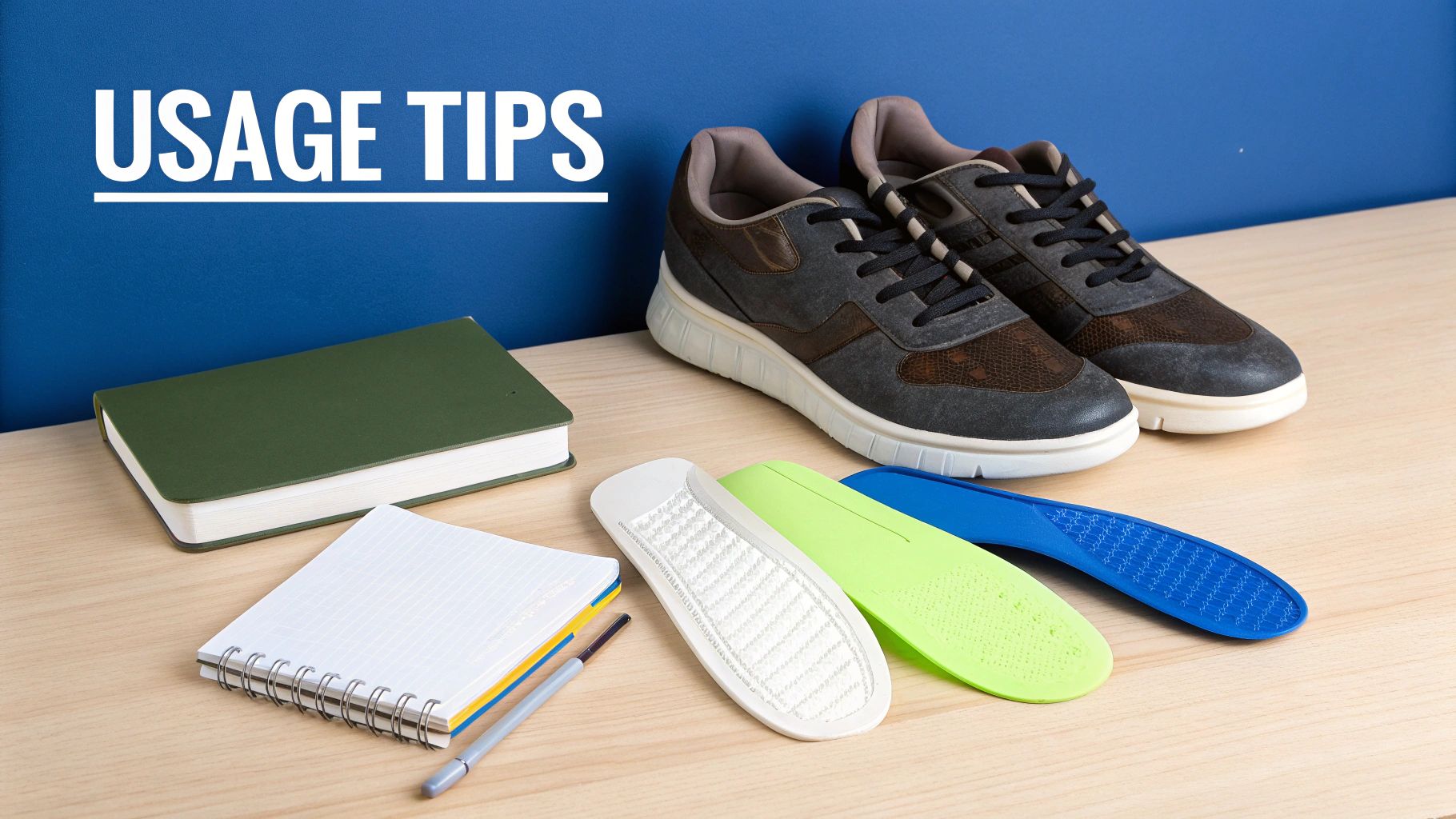
This is the big question. Should you get insoles for your existing shoes, or invest in purpose-built elevator shoes? Both give you a height boost, but they offer completely different experiences. The right choice boils down to your lifestyle and how seamless you want the experience to be.
Standalone insoles are a decent starting point. They're flexible and low-cost, letting you experiment without a big commitment. But that flexibility is also their biggest flaw.
The Case for Standalone Height Insoles
The appeal of the best height increasing insoles is straightforward, especially for newcomers.
- Cost-Effective: They are much cheaper than a new pair of premium shoes.
- Versatility: You can swap them between different shoes (as long as they fit).
- Customizable Height: Many come with adjustable layers to fine-tune your lift.
These points make insoles a tempting entry point. But for daily wear, their compromises become clear. You risk heel slippage, a cramped toe box, and the hassle of swapping them constantly.
Why Elevator Shoes Are the Superior All-In-One Solution
Here’s the thing: an insole is an accessory you add to a shoe. An elevator shoe is a complete, integrated system designed from the ground up. The entire shoe is engineered around the lift, which eliminates all the compromises of a separate insole.
With an elevator shoe, the lift is built into the shoe’s core structure. This allows designers to create a deeper heel cup and higher back, completely stopping heel slippage. The shoe is also built on a last (the mold that gives a shoe its shape) designed to accommodate the lift, so your toes have room to breathe.
An insole modifies a shoe. An elevator shoe is perfected for one purpose: to provide a discreet, comfortable, and seamless height boost without compromise.
This integrated design is the secret to all-day comfort and total discretion. For a full breakdown, our guide explaining how elevator shoes work has you covered.
Unlike traditional brands such as Chamaripa, Conzuri designs modern silhouettes that blend seamlessly into a stylish wardrobe. Our shoes are engineered for a no-compromise experience that puts your style and confidence first.
People Also Ask: Your Top Questions About Height Insoles Answered
Still have a few questions? Let's tackle the most common ones so you can feel 100% confident.
Are height increasing insoles noticeable?
This is the number one concern, and the answer is no—if you do it right. The secret is pairing the insole with the right shoe. Slide them into sneakers, boots, or any shoe with good ankle coverage, and they become completely invisible. Modern insoles are contoured to sit deep inside the shoe, unlike clunky, old-school lifts.
Can I wear height insoles every day?
Absolutely, but only if you invest in quality. This all comes down to materials. A well-made insole using ergonomic materials like high-density polyurethane or shock-absorbing gel provides the cushioning and support you need for all-day wear. Think of it like a good mattress—it makes all the difference.
Will shoe lifts damage my feet or shoes?
This is a huge myth. A properly designed, ergonomic height insole will not damage your feet or shoes. In fact, many high-quality insoles offer better arch support and cushioning than the flimsy stock inserts that come with most shoes. The real risk comes from cheap, rigid plastic lifts that create pressure points and throw your weight off balance. Stick to reputable brands that prioritize biomechanics, and you'll be fine.
Ready for a seamless boost without the guesswork? Conzuri builds the lift right into the shoe for perfect fit, comfort, and discretion every time. It’s the ultimate all-in-one solution.
Recent Articles


